
[Journal Introduction]
Research of Educational Communication and Technology
Research of Educational Communication and Technology
ISSN: 2308-3026
Online submission: Click here to submit your work
Contact the editorial team: AECT.Taiwan@gmail.com
Journal-specific website: https://taect.ilst.nthu.edu.tw/
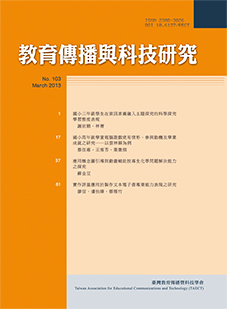
This journal was originally titled "Instructional Technology & Media" (Issue 1, February 1992 – Issue 102, December 2012). Starting from Issue 103 (March 2013), it was renamed "Research of Educational Communication and Technology," while the issue numbering continues.
This journal aims to publish original papers in the fields of educational technology and audiovisual communication, and welcomes a wide range of theoretical and practical research papers, including empirical studies, experiences of integrating technology into teaching, and critical and innovative commentary papers.
This journal is indexed in the "Taiwan Journal Article Index System" and the "Taiwan Humanities and Social Sciences Citation Index Database". In 2019, it was rated as a third-level journal in the "Taiwan Humanities and Social Sciences Journal Evaluation and Core Journal Inclusion".
The following are our recent call for papers themes. Submissions are welcome!
Each issue includes papers related to the themes of the special issues, and submissions on general topics are also very welcome.
Congratulations! This journal has won the 2013 National Library of China's "Popular Journal Dissemination - Long-Term Citation Award" in the Education category!
Issue 142: Applying AI Technology Tools to Teaching and Learning in the Classroom (Published in December 2026, deadline: April 1, 2026)
Issue 143: Open to submissions, no specific theme (Published in April 2027, no deadline)
Issue 144: Generative AI, Educational Communication and Sustainable Development: Innovation, Responsibility and Future of Educational Technology (Published in August 2027, deadline October 31, 2026)
Issue 146: Open to submissions, no specific theme (Published in April 2028, no deadline)
Issue 147: AI Companions: Design and Educational Applications (Published in August 2028, deadline October 31, 2027)
Issue 148: Design, Application and Research Trends of Extended Reality (XR) in Education (Published in December 2028, deadline April 1, 2028.)
[Current Issue Views]
第141期 (2026年08月)
DOI:10.6137/RECT.202608_(141).0000
Online reading:Click to view (you can download and save it yourself).
1. About this issue
吳純萍、王怡萱
2. 探討情意教學策略對國小高年級學生環境素養之影響:以科技融入碳足跡課程為例
簡盈妮(Chien, Ying Ni)、劉旨峰(Liu, Zhi Feng)
3. 擴增實境教育桌遊課程對學生溝通焦慮與社會網絡結構之影響
朱志明(Chu, Chih-Ming)、李德炘(Li, Der-Shin)
4. Theory-Guided Learner-Centered Error-Correction Learning System Enhancement: Preliminary Evaluation of Its Educational Potential
于富雲(Yu, Fu-Yun)
5. 影響國民小學教師科技壓力與資訊科技融入教學自我效能感之因子探究
王佩瑜(Wang, Pei-Yu)、 朱彩馨(Chu, Tsai-Hsin)、邱映瑜(Chiou, Ying-Yu)
[Past Issues Review](Issues 93 and later can be downloaded online; issues 77-92 have digital archives, and issues 1-76 are printed papers. Please contact the editorial team if needed.)
Issue 140 (April 2026)
1. About this issue
Wang Yixuan
2. A Study on the Current Status and Influencing Factors of Canva's Integration into Teaching by Public Kindergarten Teachers in Taipei City
Huang Chun-Yu and Ho Li-An
3. Teaching Content Design and Assessment of Tablet-Based Contextual Digital Games on Circle Area in Elementary Schools
Weng Shih-Ju, Young Shelley Shwu-Ching, Wei Chi-Ting
4. Using digital educational games to enhance nursing staff's learning motivation and flow experience in sexual assault evidence collection.
Chen Wei-Ching, Chang Ching-Yi, Chang Chun-Hao, Sung Han-Yu
5. The impact of learning computer programming on the computational thinking ability of Taiwanese students was analyzed later.
Liao Yuanguang (Liao, Yuen-Kuang)
Issue 139 (December 2025)
1. About this issue
Liu Yifan; Wang Yixuan
2. Motivational Interview Simulation Digital Learning Platform: Content Validity, Usability for Mental Health Nurses, and User Experience Assessment
Hsieh Wen-Ling, Lai Chien-Yu, Liu Wen-I
3. Applications of Extended Reality Technology in Anatomy: The Impact of Learning Styles and Learning Patterns on Learning Performance
Wu Yi-Chen and Wei Chun-Wang
4. Learning Experiences of Integrating Film and Digital Storytelling Strategies into Media and Health Issues Courses—Qualitative Research
Guo Chien-Lin, Chen Tzu-Ling, Lin Ying, Zheng Su-Fen
5. Exploring the impact of media literacy training on users' learning motivation, cognitive effectiveness, and self-efficacy in the metaverse—using social media platform Zenly as an example.
Wu, Pei-Yu, Lee, Yi-Shin
Issue 138 (August 2025)
1. About this issue
Sun Zhiyuan; You Shirou; Wang Yixuan; Lin Shanru
2. This study explores the impact of different integration levels of the educational metaverse platform on students' social presence and learning engagement in blended synchronous teaching.
Wang Cheng-Hung, Lu Li-Wen2, Wu Sheng-Yi
3. This article explores the impact of game-based learning in the metaverse on readers' consciousness, verification behavior, and intrinsic motivation for learning, using the issue of fake news as an example.
Lien Hsin-Yu and Chiang Tosti Hsu-Cheng
4. This study explores the impact of creating virtual reality models combined with a jigsaw puzzle-style collaborative learning strategy on students' learning achievement, learning engagement, and multicultural narrative skills.
Tsao Yen-Wei and Lai Chiu-Lin
5. College students' perception of the negative impact of parents' use of 3C products, the correlation between family rules and parent-child relationships and self-esteem.
Wu, Pei-Yu, Lee, Yi-Shin
Issue 137 (April 2025)
1. About this issue
Lin Shanru
2. Model-based STEM coffee brewing experiential educational technology application: taking the siphon coffee maker as an example.
Su, King-Dow
3. Analysis of Parents' Perspectives on Bringing Vehicles Home for Digital Learning: Large-Scale Data Analysis of BYOD & THSD Projects
Chang Wei-Shan and Kao Tai-Chien
4.The Mediating Role of Toxic Online Disinhibition and the Moderating Role of Perceived Pandemic Stress Between the Dark Triad and Cyber Aggression: COVID-19 Pandemic as the Examined Case With Longitudinal Data
Wang, Cheng-Yen, Liu, Yih-Lan
5. Engagement Reimagined: Exploring Community Participation in Blended Professional Learning Communities With TopDown and Bottom-Up Approaches
Hsiao, Jo-Chi (萧若绮)
Issue 136 (December 2024)
1. About this issue
Zhang Lijie; Lin Shanru
2. A Case Study on the Challenges of Integrating Tablets into Teaching and Strategies for Improvement: Perspectives from a Group of Elementary School Teachers in Taipei City
Chen Wei-Ru and Pan Wen-Fu
3. A Practical Exploration of the Development of a "Thinking Tool Creative Writing Module" Using LoiLoNote in Fifth Grade Tablet Reading and Writing Courses
Chien Ying-Ni and Liu Zhi-Feng Eric
4. An Exploration of the Learning Benefits of Tablet-Based Cross-Domain Module Thematic Guidance: A Case Study of Primary School Students' Affective Expression
Fang Shu-I, Hsu Chih-Hao, Tasi Yao-Hsing
5. Integrating a tablet app into elementary schools with writing difficultiesThe effectiveness of students' writing learningResearch
Lan Chieh-Ning, Yang Shwu-Ching Sheiiy, Lin Tzu-Shin
6. Comparing Automated Writing Evaluation Systems With Human Teaching and Grading Assistant: A Case Study in EFL College Class With Grammarly
Su, Tzu-wen (苏姿文)
Issue 135 (August 2024)
1. About this issue
Tony Leung; Sandy Lam
2. Investigate the impact of digital video teaching materials on learning using eye-tracking tools.
Wang Yi Hsuan and Wu Pei-Xian
3. A study on the impact of design thinking on the effectiveness of service science teaching: taking creative personality traits and learning styles as examples.
Zheng Fei-Fei and Wu Jin-Shan
4. Explore the purpose, characteristics, and user behavior of knowledge websites based on user experience.
Yu Chia-Hao
5. Analysis of the expectations of middle-aged and older adults regarding robot functions and perceived care.
Hsu, Hong-Yi; Wei, Chun-Wang
Issue 134 (April 2024)
1. About this issue
Wang Yixuan; Lin Shanru
2. Design and develop interdisciplinary role-playing games for elementary school students in the social studies domain, featuring interactive question prompts.
Chen Zhenghuan and Zhang Yuanhao
3. The Joint Effects of Storytelling and Independent Reading on EFL Children's Critical Thinking, Vocabulary Acquisition, and Learning Attitude in a Technology-Enriched Environment: A Preliminary Study
Ting-Wei Chang; Fei-yu Wang; Sy-Ying Lee
4. Investigating Mediation Effects of Self-Regulated Learning Between Learning Capability, Learning Engagement, and Learning Strategies on Online Learning Intentions of Taiwanese University Students During the COVID-19 Outbreak
Ming-Jhih Chen, Alexander MacDonald Haynes
5. Social learning networks support peer review of creative works: the difference between beginners and experts.
Rao Yishan (Jao, I-Shan), Zhang Lijie (Chang, Ben), Xiong Zifei (Hsiung, Tzu-Fei)
Issue 133 (December 2023)
1. About this issue
Lin Lijuan; Lin Shanru
2. To explore the impact of augmented reality integration into a library guided learning system on university students' learning outcomes.
Wu Tzu-Ling; Zhang Huai-Ling; Jin Kai-Yi
3. A Study on Online Literature Reading: Taking Bahamut Game Information Website Users Reading Online Literature as an Example
Lee Cheng-Chi; Lin Shang-Bang; Li Chun-Ta
4. Using source tracing clues to examine the process by which college students learn statistics through reading open-source online multi-text articles.
Chen Yu-Chun; Lai Yan-ling; Lee Yuan-Hsuan
5. Effects of Solving Mathematical Application Problems With the Support of a Collaborative Digital Reading Annotation System on Learning Performance and Motivation
Chen, Chih-Ming; Kuo, Fu-Hsiu
6. The Development of Error Correction Framework and a Preliminary Exploration of the Perspectives of Elementary School English Learners
Zhang Sheng-Yue; Yu Fu-Yun
Issue 132 (August 2023)
1. About this issue
Yu Fuyun; Lin Shanru
2. Design and consideration of integrating translated clinical scales into interdisciplinary curriculum planning: taking comprehensive geriatric medical assessment as an example.
Lee Meng-Hsueh; Su Ruei-Ning; Yu Yung-Chen; Lee Yi-Hsuan; Lin Chih-Yu; Lin Wei-Hung; Shin Jyh-Wei
3. The opportunities for pre-service teacher training and the cultivation of a growth mindset in teacher development through the integration of digital tools in design thinking.
Chen Peilan
4. The Learning Experiences of College Students' Participation in Design Thinking Courses: Questionnaire Development and Analysis of Differences in Learning Styles and Gender
Tsai, Meng-Fang; Ito, Kayo; Liu, Wangta; Liang, Shih-Shin; Chen, Yang-Hsueh
5. A Study of Integrating Gamified Video Conferencing in University Screenwriting Courses: Gather Town – Learning Motivation and Individual/Team Writing Effectiveness
Tsai, Liu, Duen Ruey; Kao, Shu-Fang
6. A Discussion on the Needs of Pulmonary Obstruction Course Education and Training among Nursing Staff in Thoracic Wards
Chen Shu-Chuan; Liu Yi-Fan
Issue 131 (April 2023)
1. About this issue
Cui Mengping; Lin Shanru
2. Interdisciplinary Information Education in Universities
Li Tsai-Yen
3. Using analytics to support social and emotional learning: Data-driven design patterns
Tu Chih-Hsiung
4. A Pandemic Look Back and Forward: Case Studies of Teaching and Learning With Digital Technology in a Malaysian University
Wong, Su Luan
5. Post-construction analysis of the impact of virtual reality applications in teaching on Taiwanese students' affective and skill outcomes.
Liao Yuanguang (Liao, Yuen-Kuang)
6. The impact of a 3D simulated head meridian teaching system on the learning outcomes of meridian courses for five-year vocational college students with different prior knowledge.
Weng Tzu-Ching; Huang Gwo-Haur
Issue 130 (December 2022)
1. About this issue
Ouyang Yin; Lin Shanru
2. Survey on Parents' Reactions to Online Learning for Elementary School Students in Nantou County During the COVID-19 Pandemic
Feng Feng-I; Yang Chou-Sung
3. Online English Direction Phases Learning Through a Virtual Reality Tour During the COVID-19 Pandemic
Liu, Pei-Lin (刘沛琳)
4. A Study on the Social Support of Online One-on-One Synchronous Teaching by University Students for Placed Youth
Wang Si-Hua; Cui Meng-Ping; Lü Ci-Han
5. Willingness to use agricultural knowledge non-profit websites
Yu Chia-Hao; Liang Chao-yun
Issue 129 (August 2022)
1. About this issue
Kao Tai-Chien; Lin Shan-Ru
2. Current Status and Needs Survey of Emergency Synchronous Distance Learning Training for Junior High School Teachers
Wu Zhuoxue; Xu Xinyi
3. "Classes Suspended, Learning Continues!": A Study on Emergency Online Learning in Higher Education During the COVID-19 Pandemic's Partial City Lockdown
Young, Shelley Shwu-Ching; Wei, Chi-Ting; Lin, Yi-Hsuan
4. An Exploration of the Effectiveness of Integrating Remote, Multi-faceted, and Interactive Teaching into Community Health and Nursing Courses During the Pandemic
Su Mei-Chen; Lin Chia-Ling; Lee Hui-Chen
5. 【Education Perspective】Assessments Strategies for Blended Classrooms in the Post-Pandemic Era: A Commentary on Bolton and Elmore Model
Chang, Wei-Shan; Halim, Abdul
2021 Annual Meeting Special Publication (April 2022)
1. About this issue
Liu Yifan; Liang Chaoyun
2. The Past, Present, and Future of Digital Learning in Taiwan's Primary and Secondary Schools
Guo Bochen
3. Needs-Driven Innovation: What COVID-19 Tells Us About Digital Transformation in Learning
Looi, Chee-Kit
4. A Study on the Observational Skills of Seventh-Grade Junior High Students Through LINE@ Integration of Scout Campus Real-World Puzzle-Solving Courses
Zhao Zhenyi (赵贞怡); Chen Yuqi (陈玉琦)
5. The impact of eye-tracking-assisted instruction on reading and solving statistical graphs.
Chen Yi-Tien; Wu Chao-Jung
6. Assessment of Learning Outcomes in Grade 5 Social Studies Integrating CLIL Teaching with Digital Technology
Tung, Chiung-Ling; Lin, Chiu-Pin; Chou, Chiou-Hui
December 2021
1. About this issue
Su Jindou; Liang Chaoyun
2. Virtual English Village: Using situational task 3D games to promote English learning for junior high school students.
Huang, Chi-Fang; Chen, Zhi-Hong; Chen, Howard Hao-Jan
3. Facebook fan page online engagement, brand trust, and brand loyalty
Zhang Wen-Jung; Zhang Chiung-Yun; Hu Da-Chian; Huang Ren-Yi
4. Forward or Backward Flip? A Study of Flipped Learning in Editing Courses
Lee Jia-Ling
5. Using a second-order meta-analysis, explore the impact of the application of information technology in teaching in Taiwan over the past forty years on student learning outcomes.
Liao Yuanguang (Liao, Yuen-Kuang)
August 2021
1. About this issue
Lin Qiubin; Liang Chaoyun
2. Using Virtual Reality and Digital Games in Local Culture Education for Elementary School Students: An Empirical Study Based on Learning Outcomes and Local Identity Perspectives
Yeh Cheng Feng; Yang Hsi Hsun
3. Design Thinking Scaffolding and Learning Context Arrangement for Science and Technology Literacy-Oriented Courses under the 108 Curriculum Guidelines: A Case Study of LEGO EV3 Robotics Learning Activities
Huang Yuan-Yen; Liu Zhi-Feng Eric; Lin Chun-Hung
4. An Exploration of Integrating Information Technology into Mathematics Teaching Activities Designed by Pre-Service Elementary School Teachers from the Perspective of the Teaching Reasoning Model
Chen, Jhih-Cheng; Wang, Juei-Hsin; Yu, Shang-Yun
5. Exploring the impact of user gender and virtual character gender on pathfinding ability through the Proteus effect.
Hsu Ling-Fang; Hsu Yu-Chen
6. A Study on Online Teaching and Learning During the COVID-19 Pandemic
Tzung Ching-Ping; Yen Cheng-Yi
2020 Annual Meeting Special Publication (April 2021)
1. About this issue
He Li'an; Liang Chaoyun
2. Leadership in Higher Education: Challenges and Strategies for Change
Frank, Blye
3. Teaching Computational Thinking by Using MIT App Inventor for Career Mobility
Freilich, Jeff
4. Society 5.0 and the Role of Educational Technology in Japan
Suzuki, Katsuaki
5. Exploring the learning outcomes of students' introductory natural science courses through the development of educational AI technology.
Su Jin-Dow (Su, King-Dow); Su Guan-Lun (Su, Guan-Lun)
6. A Study on the Design of Digital Storytelling Apps Based on Biographical Sketches and User Experience
Huang, Yu-Ting; Fan, Ping-Lin; Yu, Chi-Shan
December 2020
1. About this issue
Yang Jieqi; Liang Chaoyun
2. A Design-Based Study of Augmented Reality Board Games in Upper Elementary School Social Studies Teaching: A Case Study of the Qing Dynasty
Zhao Zhenyi; Zhang Yinsen; Yeh Yi-Hsin; Lin Yanhong
3. The impact of the PaGamO online gaming platform on the learning attitudes and academic achievements of seventh-grade students with different levels of achievement in mathematics.
Yang Shih-Fen; Ou Yang Yin
4. Explore the effectiveness of using digital game-based learning materials to assist in learning music rhythm.
Wang Yi-Hsuan; Yu Chia-Chen
5. The impact of player personality traits and time pressure on game experience, attitude, and performance.
Luo Jia-Jiunn; Guo Wan-Ju
August 2020
1. About this issue
Cui Mengping; Liang Chaoyun
2. Constructing evaluation indicators for ensuring the quality of virtual reality teaching materials
Hsin-Yih Hsu; Ying-Chih Kuo
3. The impact of augmented reality-assisted jigsaw puzzle learning systems on learning outcomes, learning motivation, and learning interest.
Chen, Zhi Hong; Li, Carolina Elena; Chi, Pei-Yun
4. An Exploration of the Effectiveness of Virtual Reality Learning Systems in Social Skills Learning for Autistic Students in Elementary and Junior High Schools
Meng Ying-Ru; Yeh Chia-Chi
5. Exploring models for using augmented reality to assist Chinese writing instruction.
Wang Yi-Hsuan
2019 Annual Meeting Special Publication (April 2020)
1. About this issue
Lin Shanru; Liang Chaoyun
2. Story-based learning methods in MOOCs: A few points to share
Lee, Jimmy Ho Man
3. Inspiring Continuing Professional Development for ALL: Case of Thai MOOC
Thammetar, Thapanee
4. Differences in the severity and frequency of harm caused by cyberbullying and the three types of cyberattacks.
Wang Cheng-Yan; Liu Yi-Lan
5. The impact of the flipped classroom model before and during class on self-disciplined learning: A case study of seventh-grade mathematics in junior high school.
Shan Huai-Kang; Yang Su-Jian; Lin Chiu-Pin
6. Integrating Augmented Reality into Multimedia Teaching Materials: A Study of Interactive E-books for Visual Arts
Chen Yih-Shyuan
December 2019
1. About this issue
Tony Leung; Zhang Yuliang
2. Relationships Between Concept Maps and Critical Thinking Skills
Tseng Sheng-Shiang; Lin Yi-Chun
3. Why They Left: The Experience of One-on-One Digital Innovation Elementary School Teachers
Chen Fei-Ching; Cai Zong-Liang
4. The impact of collaborative learning on the scientific and technological creativity learning of gifted elementary school students.
Wang Ding-Ming; Guo Pei-Sin
5. A Study on the Attitudes of Students Studying in Rural Areas to Stay and Work in Their Hometowns: The Impact of Learning Satisfaction, Creativity, and Social Capital
Chuang Hsueh-Ti; Wang Jiun-Hao
6. Factors influencing the entrepreneurial intentions of media designers
Liang Chao-Tung
June 2019
1. About this issue
Leung Chiu-wan; Yang Shu-ching
2. Factors Influencing Knowledge-Sharing Behaviors in Faculty Learning Communities
Ho, Li-An; Sung, Hung-Yen
3. An Exploration of Using Concept Mapping Software to Assist in Teaching Writing Cognitive Strategies
Yang Su-Jian; Xue Wei-Lian
4. Feasibility Study on Innovative Models of Children's Education Services
Chen Tsung-Yi; Chen Mei-Yin
5. To explore elementary school teachers' willingness to use Facebook live streaming for professional development using a technology acceptance model.
Tseng Yi-Rong; OuYang Yin
December 2018
1. About this issue
He Ronggui; Yang Meixue
2. A Study on Dialogue Context, Sticker Types, and Social Presence: Taking LINE Stickers as an Example
Yan Yi-min; Li Jiunde
3. An Analysis and Research on the Professional Practical Skills of Students in E-book Production Through Open Courses
Liao, Shin; Luo, Wei-Cheng; Ko, Ting-Yu
4. A Study on the Effectiveness of Integrating Information Technology with Metacognitive Strategies into Elementary School Table Tennis Teaching
Hung, Shiang-Wei; Chen, Wu-Chou
5. Comparison of usability, interactivity, and learning satisfaction among diverse digital learning platforms and social media.
Shih, Poyeh; Liu, Yi-Ting
June 2018
1. About this issue
He Ronggui; Liang Chaoyun
2. The impact of integrating YouTube self-directed learning into the flipped classroom on the learning outcomes of fourth-grade elementary school students in science subjects.
Yu Hui-E; Zheng Yong-Xun
3. Using creative electrochemical animation concept maps to explore students' cognitive abilities
Su, King-Dow
4. Explore the positive effects of police officers' intention to use digital learning platforms.
Chung, Chih-Hung; Tzou, Yi-Jing
5. The role and impact of film and television works in the cultural and creative industries: Taking the Korean drama "Goblin" as an example
Lee Jia-Ling
December 2017
1. About this issue
Zhang Jicheng
2. Using visual technology to explore differences in students' knowledge of the properties of material particles.
Su, King-Dow
3. The impact of flipped classroom teaching on the learning outcomes of vocational college mechanical engineering students in their professional subjects.
Tseng Meng-Shan; Lee Yi-Fang
4. An Experimental Study on Introducing the Dynamic Geometric Community GeoGebra into Junior High School Mathematics Teaching: Taking the Graphical Form of a Linear Equation in Two Variables as an Example
Hsueh Hsiao-Lin; Chou Pao-Nan
5. Observations on Scientists' Participation in Public Communication – Discussions on the Executive Yuan's Atomic Energy Council's Use of Facebook to Market Science Policies
Shan Wen-Ting
6. Smartphone Addiction and Related Factors among Elementary School Students in New Taipei City
Wang, Chih-Jou; Zhang, Fong-Ching; Qiu, Chiung-Hui
June 2017
1. About this issue
Xin Shichang; Luo Lunxin
2. A long-term study on integrating inquiry-based information literacy into the curriculum and problem-solving skills in elementary schools.
Chuang Sheng-Yu; Lin Ching Chen
3. The impact of elementary school students' viewing of ocean-themed cartoons on their interest in and literacy about the ocean.
Zhang Zhengjie (Chang, Cheng-Chieh); Yang Huilin (Yang, Huei-Lin)
4. Constructing a digital learning application system for visual perception and observation
Lin Tsung-Han
5. Trend Analysis of E-book Research in the Field of Library and Information Science
Hu, Te-Chia; Lin, Weijane
December 2016
1. About this issue
Yue Xiuping
2. Possibilities and Considerations for MOOCs in the Training and Development of Public Sector in Taiwan
Chen, Tzy-Ling; Huang, Chao-His; Lan, Yu-Li
3. A Study on the Design of Online Mathematics Verbal Comprehension Tests for Low-Achievement Elementary School Students Using Eye-Tracking Technology
Huang Shih-Yun; Cui Meng-Ping
4. Explore the benefits of Kahoot cloud-based real-time feedback system in assisting high school Chinese language learning.
Wang Yi-Hsuan
5. Using digital board games to explore the relationship between rational emotional beliefs, empathy, and emotional decision-making styles.
Hsu, Yu-Jen; Yang, Mei-Chuan
August 2016
1. About this issue
Chen Ziling
2. A Study on Elementary School Teachers' Satisfaction with the Use of Electronic Mathematics Textbooks: A Case Study of New Taipei City
Chang, Chiunj-Sui; Lee, Hui-Ling
3. Using mobile devices for digital storytelling to facilitate civic engagement in education: An example of teachers guiding elementary school students to explore farmhouse issues.
Yu Cheng-Nan
4. A study on the correlation between college students' self-concept and smartphone addiction
Chaung, Hsiu-Min; Chen, Yang-Hsueh
5. A study on the correlation between junior high school students' digital literacy, peer relationships, and awareness of internet safety.
Kung Chin-Hsun; Cheng Yung-Hsun
April 2016
1. About this issue
Xu Shikuan
2. An Action Research on the Development and Implementation of Web-based Teaching Materials for Human Rights Education in Elementary Schools
Ting-Jung Chiu; Fu-Yun Yu
3. Reflections on Social Reproduction and Critical Education in Early Childhood Electronic Picture Book Learning Activities
Ru-Si Chen
4. An Exploration of the Effectiveness of Integrating Flipped Classroom Learning into the Science and Technology Curriculum in Upper Elementary Schools
Kuang-Hsia Liu; Wan-Yu Chou
5. The compositional characteristics of online teacher communities and related factors in the provision and receipt of social support within these communities: A survey of a teacher Facebook community revealed...
Tsai-Yuan Chung; Yi-Ling Chen
December 2015
1. About this issue
Yue Xiuping
2. Exploring Teacher's Role in Students' Internet Overuse Problems: Instructional Strategies and Emotional Support
Shih-Kuan Hsu
3. Research on selecting tablet applications to assist low-achievement learners of English.
Tonny Meng-Lun Kuo; Shelley Shwu-Ching Young
4. A Preliminary Exploration of Using Educational Games to Enhance History Learning Effectiveness for Seventh-Grade Junior High Students
Ting-Ling Lai; Su-Chen Peng
5. A Study on the Application of Facebook Social Network in Tai Chi Teaching
Yun-Her Hong; Wu-Chou Chen; Shiang-Wei Hong
August 2015
1. About this issue
Xu Shikuan
2. A Study on the Application of Facebook Groups in Vocational and Technical Education: Analysis of User Perception and Online Behavior
Chi-Yu Yang; Fu-Yun Yu
3. A Study on English Listening Anxiety Among High School Students: Using Cognitive Apprenticeship as an Instructional Design Model
Mi-Kuei Tsai; Yungwei Hao
4. A Study on Internet Usage Patterns of Junior High School Students from Different Social Classes
Chien-Lin Lo
5. A Study on the Learning Effectiveness of Task-Based Learning Combined with Contextualized Action Learning for Tourism Department Students
Ju-Yin Yang; Yao-Ming Yeh; Sheng-Ping Yang; Yen-Chen Yen
April 2015
1. About this issue
Xu Xinyi
2. The Ideas, Practices, Influences, and Implications of Sandel's Open Education
Chen-Li Huang
3. Inspiring Children's Reading: An Analysis of the Pictorial Representation and Functions of Children's Books on Animals and Plants
Mu-Chien Chou; Ching-Yuan Huang; Meng-Yu Wun
4. A study on mobile phone usage behavior and mobile phone addiction tendencies among high school and vocational school students.
Zheng-Chieh Chang; Mei-Yun Shih
5. A study on user acceptance of integrating motion-sensing gesture cursors into matching game learning.
Chun-Hung Lu; Chun-Pin Hsu; Suryawahyuni Latief; Wen-Ling Lo; Wen-Fu Pan; Tsung-Yi Liu
December 2014
1. An Initial Exploration of the Usability of Newspaper Reading Apps: Taking United Daily News Plus as an Example
Hsiu-Ping Yueh; Lin-Chao Fu
2. The impact of multimedia teaching materials and touch screen teaching on the Chinese language learning of junior high school students with intellectual disabilities.
Wang Xin-Yi; Cui Meng-Ping Tsuei
3. Reflections of Early Childhood Teachers on the Role of Digital Media in Enhancing Children's Reading Motivation, Reading Comprehension, and Communication Interaction
Ru-Si Chen
4. How Preschool Children Read Picture Books – An Initial Exploration of the Eye-Tracking Process
Shu-Hui Chiu; Li-Hsiang Liao
August 2014
1. The mediating effect of distance learning implementation and digital teaching materials on the effectiveness of engineering learners
Hsiu-Ping Yueh; Chao-Yun Liang
2. Construction of Indicators for College Students' Social Participation in Online Learning Buddy Services
Lih-Juan Lin; Hong-Yen Lin; Tze-Han Lu
3. The Influence of Multimedia Presentation Modes and Cognitive Styles on the Learning Outcomes of Elementary School Natural Science
Zheng-Chieh Chang; Hsiu-Ching Chuang; Lwun-Syin Lwo
4. A Study on Students' Internet Cafe Consumption Behavior and Parental Discipline Styles and Peer Relationships: A Case Study of Upper Elementary School Students in New Taipei City
Chieh-Hua Lu; Chi-Ping Cheng
5. Analysis of College Students' Problem-Solving Abilities Regarding Social and Technological Issues
Wang Kaiping
April 2014
1. Exploring the Learning Effectiveness of Immersive Molecular Chemistry Teaching for Senior High School Students
King-Dow Su
2. Implications of British Media Literacy Education for Media Literacy Education in Taiwan
Pei-Yu Lee
3. Reconstruction and Representation of the Technology-Driven Development Process
Kai-Hung Liao; Li-Pei Peng
4. Integrating visual and verbal symbols into music teaching enhances student learning performance.
Li-Chun Tseng; King-Dow Su
September 2013
1. A Study on Synchronous Video Activities in Digital Learning Courses – An Analysis from the Student's Perspective
Jia-Ling Lee; Bai-Yun Chen
2. A Study on Digital Media Literacy: A Case Study of Blog Use by Senior High School and Vocational School Students in Taitung County
Ming-Che Chang; Ben-Yuh Liao
3. A Case Study on the Knowledge Integration Process for College Students in Online Thematic Courses
Chien-Liang Lin
4. The impact of the zoom function of Prezi presentation software on the learning motivation and learning outcomes of elementary school students in the social studies domain.
Hsin-I Yung; Yi-Hsing Chen
June 2013
1. Usability Evaluation Study of the Homepage Layout of a Human Resources Website
Yu-Ching Wang; Hsiu-Ping Yueh
2. A Study on the Application of a Problem-Oriented Online Learning System in Information Literacy and Ethics Research for Fifth-Grade Elementary School Students – Taking the Copyright Unit as an Example
Cheng-Hung Hou; Meng-Ping Tsuei
3. A Study on the Role of Online Badminton Tactical Systems in Cultivating Creativity in Elementary School Students
Shiang-Wei Hung; Wu-Chou Chen; De-Ren Li
4. A Study on the Current Status of ICT Integration in Teaching at Prezi Elementary School – From Larry Cuban's Perspective on Technology Education
Shih-Miao Jao
March 2013
1. The attitude of third-grade elementary school students towards scientific inquiry learning that integrates information literacy into thematic inquiry.
Hsin-Ying Hsieh; Ching Chen Lin
2. A Study on Computer Game Use, Participation Motivation, and Academic Achievement among Upper Elementary School Students – A Case Study of Yunlin County
Chia-Hui Tsai; Hsueh-Fang Wang; Duen-Yian Yeh
3. An Exploration of the Application of Concept Maps and Animation to Enhance the Problem-Solving Abilities of Vocational College Students in Chemistry
King-Dow Su
4. Research on the application of practical assessment to professional competence in creating text-based e-books.
Shin Liao; Yi-Chen Pan; Ya-Chu Tsai
December 2012
1. The Combined Effects of Learning Environment and Personality Traits on Student Imagination
Sheng-Chih Chen; Ying-Hsiu Huang; Chao-Yun Liang
2. An Analysis and Research on English Writing – “Sentence Pattern Application Skills” Combining “Prompt Strategies” and Multimedia Teaching Materials
Hung-Liang Lee; Yi-Cheng Lee; Shu-Feng Teng; Hwey-Rong Lin
3. Action Research on the Application of Web 2.0 in Image Processing Blended Learning Courses
Jy-Kuang Fang; Bi-Yun Huang
4. A Study on Collaborative Learning Supplemented by E-textbooks in Fourth Grade Chinese Language Teaching
Hsin-I Yung; Chia-Jung Wu
September 2012
1. Exploring the integration of information technology into early childhood learning activities: interactive teaching, peer learning, and professional cognition.
Ru-Si Chen
2. Analysis of social media users' behavioral perception, information verification behavior, and information trustworthiness – a case study of Facebook users.
Shin-Chun Wu
3. Extension and Rethinking of Science and Technology Teaching Knowledge for Elementary School Mathematics Teachers – Taking the Integration of Interactive Whiteboards into Teaching as an Example
Wang Yulan
4. Research on iPad reading operations by elderly users
Hsiu-Ping Yueh; Wei-Jane Lin; Mong-Chieh Lee; Hui-Chun Lin; Yueh-Chi Luo
June 2012
1. Some Reflections on the Application of Teaching Technology and Media – In Celebration of the 100th Issue of "Teaching Technology and Media"
Wen-Jing Shan
2. A Review and Analysis of Educational Technology Research in Taiwan: Content Analysis of Papers Published in *Educational Technology and Media*, 1992-2012
Liao Yuanguang; Xu Xinbiao; Lin Jiarong; Wu Huiying
3. Future Research Trends in Educational Technology and Digital Learning – A Record of an Expert Symposium
Editorial Department of "Teaching Technology and Media"
4. Innovative Learning: Application and Practice of Information Technology
Hsin-I Yung; Yuan-Chen Liu
5. A model of an educational environment where learning is ubiquitous
Chien-Pen Chuang
6. A Preliminary Exploration of Research and Application Trends of E-books in Learning
Wu-Yuin Hwang; Su-Ching Pan; Yi-Fan Liu; Hsin-Han Liu
March 2012
1. When Students Imagine in Digital Media Design: Exploring Factors that Promote Imagination and Their Correlation
Sheng-Chih Chen; Ming-Chieh Hsu; Wen-Shan Chang; Chao-Tung Liang
2. A Study on the Perceptual Leadership of Elementary School Teachers and Principals in Technology
Zhang Yuliang (Yu-Liang Chang)
3. An Exploratory Study on the Application of Information Technology in Chinese as a Second Foreign Language Course for Ethnic Minority Secondary School Students
Kit-Ching Wong
4. How to build a teaching-oriented online audio-visual teaching material database – taking the construction and application of an "audio-visual teaching material blog" as an example
Hung-Liang Lee; Chun-Hsing Shen
December 2011
1. A Survey Study of Elementary School Teachers' Views on Principals' Technological Leadership Performance – A Case Study of Taitung County
Tung-Chung Tsai; Hsiao-Yun Huang
2. Psychological factors that stimulate students' imagination in digital design and their impact
Yu-Ling Hsu; Sheng-Chih Chen; Ming-Chieh Hsu
3. A Study on the Application of Transnational Thematic Learning in High School English Writing
Hsueh-Ti Chuang; Chao-Yun Liang
4. A case study on the application of multimedia picture books and storytelling techniques in reading comprehension among elementary school children with mild intellectual disabilities.
Chia-Jung Lin; Li-Li Chen; Hsiao-Wei Lin
September 2011
1. Parents' attitudes towards the negative impacts of children using computers
Ru-Si Chen
2. A Study on Students' Willingness to Use Digital Learning Platforms—From the Perspective of Individual Differences and Social Impact
Zeng Ruiqiao (Jui-Chiao Tseng)
3. Research on the Application of Proficient Learning Strategies in Computer-Assisted Instruction to the Transformation of Science Concepts in Elementary Schools
Hung-Chang Lin; Chi-Yu Chen
4. A Study on the Learning Effectiveness of Combining "Experiential Strategies" and Multimedia Teaching Materials in the "Land Subsidence" Unit of Elementary School Environmental Education—Reflections on Success Factors of Multimedia Teaching
Hung-Liang Lee
June 2011
1. A Study on the Application of Realistic Cameras in Elementary School Teaching – A Case Study of Three Elementary Schools
Liao Yuanguang; Wang Yanchao; Chen Yunru; Liu Yihui
2. A Study on the Effect of Computer-Aided Modeling Learning Activities on the Modeling Ability of Upper Elementary School Students
Ying-Chieh Lin
3. Design principles for fostering creativity from the perspective of human-computer interface
Jen-Yi Chao; Tzung-Shi Yang
4. Research on Integrating "Problem-Oriented" Strategies into the Development of Digital Training Materials – Taking Convenience Store New Employee Training as an Example
Chiung-Sui Chang; Wan-Tzu Wong; Jui-An Pan
March 2011
1. A study on the influence of musical context on mathematical problem-solving and cognitive load.
Pei-Yu Chang; Hui-Min Wu
2. An intelligent poetry and lyric writing assistance system based on a language knowledge base.
Luo Fengzhu (Feng-Ju Lo)
3. Research on Key Success Factors of Digital Learning Application in Medical Education
Yu-Ni Cheng; Yaw-Jen Lin
4. A Preliminary Exploration of the Reading Process and Behavior of E-book Comics
Hsiu-Ping Yueh; Wei-Jane Lin; Mong-Chieh Lee; Jing-Ying Huang; Ssu-Tsen Yeh
December 2010
1. The Impact of Reflection Will on Learning Motivation – Taking the Use of Online Portfolio Assessment Systems as a Reflection Tool as an Example
Jyun-Yu Lin; Chi-Cheng Chang
2. What do children do in MapleStory? This explores children's behaviors and attitudes towards online games.
Shu-Hui Chiu; Chia-Chi Chen; Chung-Chun Chen
3. A Preliminary Exploration of Key Success Factors for the Application of Audio-Visual Blogs in Online Education
Kuang-Wu Koai; Chun-Ching Chen
4. Applying peer-assisted learning strategies to information technology courses in inclusive education in elementary schools.
Yi-Chuan Lu; Meng-Ping Tsuei
5. A Study on Integrating Media Literacy into the Social Learning Domain of Elementary Schools – From a Critical Pedagogical Perspective
Wu-Chi Chang
September 2010
1. The impact of multimedia prompts and the use of reflection on learning physics concepts.
Li-Ping Lee; Shyh-Chii Tzeng
2. Analysis and Research on Project-Based Learning Using the "Specialty Allocation Strategy"—The Design and Production of Instructional Animations
Hung-Liang Lee; Hsin-Yin Hsu
3. An Exploration of Learning Motivation Among Elementary School Students Using the Palace Museum's e-Learning Platform for Chinese Jade Artifacts
Jen-Yi Chao; Ru-Ling Huang; Kai-Jie Zhuang
4. The impact of concept maps and program V-diagrams on college students' programming problem-solving abilities
Chien-Liang Lin; Tai-Chu Huang
5. The acceptance of innovation and technology among teachers in e-learning demonstration schools in Pingtung County using interactive whiteboards in teaching.
Chih-Lung Lin; Shih-Hsiung Chou
6. Implications of Imagination Research for Teaching Development
Chao-Yun Liang; Yu-Ling Hsu; Yu-Tung Liu; Yuan-Zone Lee
[Bibliography of Periodicals Over the Years]
June 2010
1. The impact of digital learning feedback on learning motivation: A case study of high school students in central Taiwan.
Xu Tingxiang and Wang Siqi
2. Online learning experience perceptions and self-directed learning tendencies of non-standardized online learners
Wei Huijuan and Chen Zhaoxiu
3.Considerations for the type, directory, and structure of digital learning journey archives
Zhang Jicheng, Lin Weiqian
4.A Preliminary Study on the Usability of Interactive Whiteboards for Pre-service Teachers
Yue Xiuping, Li Yiru, Zhou Yanliang, Chen Junyu, Li Mengjie
5. The impact of information technology integration models and learning styles on elementary school students' learning performance and attitudes towards art appreciation.
Xiao Guihui and Chen Mingpu
6.An Empirical Study on Teaching Chinese Idioms Using Podcasts
Xu Xinyi and Liao Wenxiong
7. A survey on the current status, needs, and attitudes of civil servants participating in online in-service training.
Wu Shuzhen, Lin Jihui
March 2010
1. Analyzing the talent selection trends in advanced design education based on entrance exam questions.
Xu Mingjie, Chen Qiyi
2.A Study on the Correlation between Viewing Motivation for Knowledge Programs and the Shaping of Personal Professional Image
Cai Shaochen, Xu Mingjie, Liang Chaoyun
3.A Study on Teaching Information Literacy to First-Year University Students Using the Big6 Problem-Solving Model
Lin Jing
4. An Action Research on the Application of Digital Teaching Materials in Remedial Teaching of Phonetic Symbols in Lower Elementary Schools
Weng Shuhua, Zheng Yijia
5. A Study on the Integration of ARCS Motivation Model and Information Technology into Teaching: A Case Study of Fourth Grade Reading Instruction in Elementary School
Ya-ting, Lin Jia-rong
6. Designing and developing a "computer practice system" using "language elements" as learning tools: A study on the use of "word and sentence connections" and their learning effectiveness.
Li Hongliang
December 2009
1.Exploring the Market Demand for Digital Learning in China from the Perspective of Content Providers
Liang Chaoyun and Lü Shaowei
2. Research on Online Discussion Implementation Strategies and Evaluation
Zhang Zhiming, Zhou Qian
3.Analysis of digital learning journey file format, content items, and multimedia
Zhang Jicheng, Lin Weiqian
4. Evaluation of the usability of the online grading system for college students' English essays
Song Qianru
5.A Study on the Perceptions and Key Success Factors of Information Technology Education Promotion among Elementary and Middle School Administrators: A Case Study of an Outstanding Information Technology Teacher Team in Taoyuan County
Zhu Fangqing, Liang Chaoyun, Xu Mingjie
6. Using "catalytic strategies" as a motivational method for online discussion activities: A study on students' communication behavior and learning outcomes.
Li Hongliang, Xiao Jiacheng
7. Exploring Interface Design of Cross-Cultural Websites Through Multilingual Website Usability Assessment and Taiwanese and American User Preferences
Gu Dawei, Zhang Jiaqi
September 2009
1.A Study on the Motivation for Choosing Video Sharing Websites: A Case Study of Communication Department Students
Li Jialing
2. A study on remedial teaching for elementary school students with low achievement in English learning using online video courses: Implementation and effectiveness of the "blended enhancement strategy".
Li Hongliang, Liao Huijun
3. Blogs and Adult Learning: A Feminist Educational Perspective
Zhu Rujun, Zhu Zijun, Lin Jiachun
4.Case Study of Enterprise Digital Learning Implementation Process of Participants in Enterprise Learning Network from 1992 to 1995
Yue Xiuping, Chen Ziling, Liu Yilin, Chen Guodong
5.A Study on Students' Use and Evaluation of Online Lecture Resources: A Case Study of the National Taiwan University Lecture Network
Hu Qiufan, Yue Xiuping, Qiu Li'an, Xu Shikuan, Zhuang Ronghui
6. The impact of Earth Science inquiry-based teaching in the e-classroom on the learning achievements of ninth-grade students: taking the weather unit as an example.
Chen Renjie, Wang Guohua, Lin Kaiyin, Yang Ziying, Yu Anshun, Yang Xiuting
June 2009
1.A Study on the Construction of Evaluation Indicators for Fun and Engaging Digital Learning Materials Applied to Elementary and Middle Schools
Jiang Yuwen, Wang Xuewu
2. A Study on the Effectiveness of Motivational Dynamic Instructional Design
Hong Rongzhong, Chen Mingzhang, Yuan Yuan
3. A study on the integration of digital archives into teaching by elementary school teachers in Taipei City.
Lin Yiwen, Lin Jiarong
4.Research on the Application of Wiki Platform in University Gender General Education Courses
Huang Ruoyi, Yue Xiuping, Zhang Jue
5.Do children understand? Appropriateness test of software image metaphors.
Su Yixi, Qiu Shuhui
March 2009
1. The effect of the time variable in multimedia learning formats and the redundancy principle
Chen Yaozhen, Wu Yuying
2.A Study on the Effectiveness of Digital Game-Based Cube Net Drawing Teaching Materials in Enhancing Elementary School Students' Spatial Abilities
Wang Xuewu, Zeng Shupei, Huang Yuting, Wang Yin
3. Vocabulary Games Invention and Its Learning Effectiveness
Chen Meihua
4.Reflecting on the Application of Community-Participation-Oriented Teaching from the Perspectives of Award-Winning Teachers at the International Schools Network Expo
Zhang Yiwen, Chen Xinlin, Liang Chaoyun, Xu Yuling
5. A Study on the Digital Gap Among Indigenous School Children in Remote Areas
Cai Dongzhong, Chen Xiangwen
6. Media literacy education in enhancing students' cultural reflection and lifelong learning abilities: Curriculum planning and development in elementary and junior high schools.
Jian Meiying
December 2008
1. Teachers' action time and their attitude towards using mobile devices
Xu Ziyuan, Qiu Guifa
2.Analysis of Information Technology Integration into Teaching Innovation Behaviors and Predictive Indicators among Vocational High School Teachers in Taipei City
Zhang Jicheng, Wang Qiumeng
3. A study on the correlation between the use of English-language television media for drama genres and English language learning.
Huang Huiying, Tian Manyi
4.A Study on the Methods and Influencing Factors of Information Technology Integration in Teaching by Elementary and Junior High School Teachers in Taipei City and County
Xu Shikuan
5. An Exploration of the Development and Effectiveness of Online Teaching Training Courses for Nursing Teachers
Liu Guifen, Su Xiujuan, Qiu Shufen
6. A Feasibility Study on Replacing Traditional Campus Learning Columns with Digital Signboards
Wu Duheng, Xu Zhaoli
September 2008
1. An Analysis and Research on the Production of Teaching Media and the Application of Human Resource Strategies
Li Hongliang, Su Rongmei
2.The school promotes research on "integrating information technology into all subjects".
Li Shuhui, Liang Chaoyun, Zhong Shuchuan
3. A Survey and Research on the Current Status of Internet Safety Education in Primary Schools in Taiwan
Zhang Fengmian and Ouyang Yin
4.Letting children create ebooks: Difficulties faced by kindergarten teachers in providing scaffolding
Qiu Shuhui
5. Oral Communication in the Windows Era: An Initial Exploration of the Internet Experience of Visually Impaired Computer Users
Shi Boye
6.User-Centered Design Considerations and Development Model for Local Education Resource Networks
Yang Qianqian, Zhou Wenxiu, Liang Chaoyun, Xu Yuling
7. A Preliminary Exploration of the Design and Operation of Online Reading Clubs for Elementary School Teachers
Zhang Zhiming, Zhou Qian
June 2008
1.A Study on the Effectiveness of Handwriting Instruction in First-Grade Elementary School Students Using Digital Image Imitation and Feedback Teaching Strategies
Zhang Lingyi, Cui Mengping
2.A Survey Study on Integrating Media Literacy into Teaching among Elementary School Teachers
Chen Shanghui, Lin Jing
3.A Discussion on the Effectiveness and Attitudes of Learning Support and Prerequisite Knowledge for Advanced Learners in Programming Projects
Wu Wenping, Chen Mingpu, Zhou Yunfang
4. A study on using digital archiving to develop a technology history teaching module to enhance high school students' creative thinking abilities.
Yu Jian, Yang Jinxin, Lin Hongchang, Wang Yanchao, Yu Ruizhen, Lin Kunyi, Xie Wenbin, Huang Zhixun, Fan Daoming
5. A Study on the Learning Effectiveness of Online English Writing Courses for First-Year University Students Using "Enhancement Strategies"
Li Hongliang, Su Yutang, Lin Huirong
6. A Discussion on the Application of ROI Model in the Performance Evaluation of Enterprise Digital Learning Solutions
Lai Hongji
7. Pilot Research on the Construction and Application Effectiveness Evaluation of the Arts and Humanities Teaching Module System
Xu Zhaoli, Chen Suzhen, Guo Junyi
March 2008
1. Visual feedback-based motor skill learning aids: Taking junior high school scout knot-tying courses as an example
Lin Yi-hsuan, Huang Wen-chi
2. Children and Online Games: Gender Construction and Cultural Practice: A Case Study of School Children in Remote Areas of Taipei County Playing MapleStory
Lin Yuling
3. A Study on the Design and Usability Evaluation of English Learning Websites for University Students
Song Qianru
4.Learner reflective behavior in online archival assessment
Zhang Jicheng, Chen Zhengchuan
5.The Educational Implications of Digital Problem-Based Learning: Design Architecture and Practical Effectiveness
Yu Zhengxian and Liang Yunxia
6.Research on the Development Strategies and Effectiveness of Digital Learning Content for Cultivating Interdisciplinary Science and Technology Talents
Yue Xiuping, Li Xiaolan, Hu Qiufan, Liu Peiling, Guo Maokun
7.Integrating online game engagement with the sustainability of online learning materials to develop engaging digital learning resources
Jiang Yanxing, Liang Chaoyun, Zhang Hongyi
8. Analyze the impact of multimedia computer-assisted instruction on learning outcomes using cognitive load theory.
Zhang Liming, He Peijia
December 2007
1. A Study on the Presentation Methods of Dynamic Text on Small Screens and Reading Efficiency
Zhuang Yaru, Yang Chi Neng, Cai Huizhen
2.Digital archives integrated into university general education: taking the study of female figures as an example
Lin Jing, Hong Meiling, Li Yiling, Wu Junnan
3. The Development of Contextualized Digital Learning Courses: Taking Mobile Phone Store Employee Training as an Example
Huang Guohong, Dong Jirui
4.Evaluation and Discussion of the Quality Gap in Digital Learning Services
Chen Mingpu and Zhang Guoen
5. Research on the Image Presentation Principles of Corresponding Teaching Strategies and Conceptual Knowledge Content
Gu Dawei and Chen Wanru
6. An Analysis of the Content of Marine Education Promotion in Elementary and Secondary Schools and Its Websites
Luo Lunxin and Yang Yumei
7.A Discussion of Instructional Design Principles for Digital Learning in Skills Domains
Chen Yizhen, Xu Xinyi
8. Application models and effectiveness evaluation of systems thinking in integrating information technology into comprehensive activities.
Xu Zhaoli, Wang Xiaoxuan, Li Mengzi
September 2007
1.Human resource management systems that promote knowledge sharing in game development organizations
Zhang Fengzhu, Liang Chaoyun
2. Exploring the effectiveness of life education curriculum experiential activities in teacher training using a textual exploration model.
Xu Jialing, Zhang Yafang
3. An Exploration of the Characteristics and Effects of Online Community Interaction
Chen Bixiang and Li Peiyu
4.The Integration of Information Technology into Teaching Innovation among Senior Vocational School Teachers in Taipei City: An Analysis from the Pre-Teaching Preparation, During Teaching, and Post-Teaching Assessment Stages
Zhang Jicheng, Wang Qiumeng
5.A Study on Factors Considered by Administrators in Choosing Computer-Based Teaching Application Models: A Case Study of Private Kindergartens in Taichung
Lai Yueh-chen and Chiu Shu-hui
March 2007
1. Research Methods in the Development of Educational Technology: An Analysis of Design-Based Research (DBR)
Gao Xunfang, Jiang Wenjun
2.Reflections on the Development of Educational Technology Research
Liu Xiuhao, Bai Yifang
3.A Discussion on the Current Status of the Certification of Digital Instructional Design Professionals
Chen Mingpu
4. Use online discussion forums to assist students in learning introductory computer science.
Liu Zhifeng
5.A Study on Online One-on-One English Tutoring from the Perspective of Online Teachers
Zhong Yumin, Yang Shuqing
6.An Initial Exploration of the Design, Development, and Operation Model of Blended Learning Curriculum in Elementary Schools by an Information-Collaborative Teacher Team
Cai Zhenghong, Zhou Qian, Peng Xinyi
7.A Preliminary Exploration of the Application of Google Earth in Fifth Grade Social Studies Geography Teaching
Chen Junyuan, Zhao Zhenyi
March 2007
1. A study on using computers to facilitate student questioning in the classroom
Zhu Kegang, Li Mingjuan, Xia Yande
2. Information Integration: Investment in Teaching and Learning
Lin Lijuan
3. Implications of Strategic Leadership for Primary and Secondary School Information Group Leaders in Promoting Information Education
Xiao Yingli
4. An Initial Exploration of Using Media to Enhance Critical Thinking Skills in Gifted Elementary School Students
Li Zongwei, Lin Zuoyi
5. Use interactive animated simulation aids to improve students' problem-solving abilities in programming.
Liu Zhifeng
6. Research on integrating remote laboratories into the school's online learning platform.
Cai Huizhen and Wu Jicong
7. A Study on the Interface Evaluation of Online Learning Platforms: A Case Study of National Taitung University
Lin Yintong, Liao Benyu
December 2006
1.The Application and Effectiveness of Networked Archival Assessment in Computer-Based Thematic Learning
Zhang Jicheng, Peng Xingrui
2. A Study on the Effectiveness of "Interactive Representation Teaching Strategy" in the Learning of the Concept of Convection among Elementary School Students
Qiu Tingrong, Li Hongliang, Liao Benyu
3. Implementing HPT Approach to Business Training: A Case Study of Improving Employees & apos; Performance in a Multimedia Company
Lin Jiarong
4.A Study on "Participation Motivation" and "Work Style" of Chinese Wikipedia Administrators in Taiwan
Chen Jiaheng, Liang Chaoyun
5. A Study on Online Information Search by Fifth-Grade Elementary School Students
Xu Yiping, Chen Qingfan, Lin Minhui
6. A study on the impact of the nature of digital learning courses and self-learning performance evaluation on learning satisfaction.
Liu Jianren, Chen Hongzhi, Lin Jianliang
September 2006
1.A Study on the Perceived Benefits of Digital Learning for Civil Servant Learners from the Perspective of Innovative Communication
Chen Ziling, Chen Zirong, Yue Xiuping
2. An Exploration of the Social Hierarchy of Digital Learning Concerns among Primary and Secondary School Teachers
Xu Jialing, Zhang Yafang
3.A Review and Outlook on Domestic Research on Gender and Digital Gap
Lin Liangwen, Liao Yuanguang
4. Construction and Evaluation of Skills Simulation Learning Systems
Yu Guangzhao, Xu Haogao, Yan Minghong
5. Theory and Design of Applying Networked Resource Integration Concept Mapping System to History Teaching
Zeng Zhengyi, Yang Shiyao, Huang Qizhuang
June 2006
1.Is this the software I want?: The Early Childhood Education Software Market from a Consumer's Perspective
Qiu Shuhui
2.A study on the correlation between video game playability factors and digital learning engagement and persistence.
Liang Chaoyun, Zheng Shiyu, Yang Yufen
3. A study on the sense of presence of social members in computer-assisted learning environments: examining the impact of verbal feedback on children.
Dong Fangwu, Deng Yixin
4. A study on the correlation between offline and online interpersonal interactions among college students.
Huang Huiying, Chen Guanxin, Chen Weiren
5.A Case Study on the Relevance of Online Group Discussion Performance to Thematic Works
Zhang Jicheng
6. An Exploration of Integrating Calculation Tables into Nine-Year Integrated Mathematics Learning
Ruan Hongzhan
March 2006
1. Exploring the psychological dilemmas and self-organizing learning in the online world using a holistic systems approach.
Li Mingfen
2. Exploring the Design Concepts of Serious Games in Learning Technology: Playability and Usability Perspectives
Li Junde
3. Research on Information Security Management on University Campuses
Wang Yaohua
4.Exploring the Goals and Strategies of Productive Teacher Training Courses
Chen Mingpu
5. Design and construction of an online teaching platform primarily based on images and signage.
Cai Zhemin, Fu Yaoxian, Wang Lianxiang, Xiao Zhixiang
6. A study on the suitability of online learning subjects for adult learners.
Chen Nianxing and Xie Shengwen
7. Design and implementation of the tuition and miscellaneous fees assessment system
Jian Peixiu
December 2005
1. A Study on the Process and Achievements of Online Thematic Learning
Liu Mingzhou, Wang Zhenyu
2.Post-use evaluation study of the space use and planning of elementary school teaching resource centers: a case study of a medium-sized school in Chiayi area
Lin Jing, Huang Yuwen
3. An Action Research on Integrating Electronic Picture Books into English Language Teaching
Liu Peiqi and Zhang Qiongsui
4.Analysis and Discussion on the Quality Evaluation of Digital Teaching Materials
Chen Mingpu
5.A Study on Integrating Learning Content for the Elderly into Digital Television
Lam Tsz-kit and Leung Chiu-wan
6.Exploration and Application of Teaching Strategy Design Principles in the Affective Domain of Digital Textbooks
Xu Xinyi and Yang Desi
7.A Preliminary Exploration of the Application of Learning Platforms Combined with Instant Messaging Systems in After-School Tutoring
Yang Shuqing, Li Yifang, Ke Huawei
September 2005
1. A Study of Online Creative Teaching Communities: Open Communities
Hsu Yu-chang
2. Analyzing the Promotion Strategies of Elementary School Information Seed Schools from the Perspective of Innovation Promotion
Zhang Yafang, Liu Changzong
3.Research on Teachers' Quest for Teaching Information and the Construction of Online Teaching Resource Database
Yue Xiuping, Xu Shikuan, Li Yingzhen
4. Guiding online teaching
Yang Jiaxing
5.Exploring the Application of Mobile Technology in Teaching Contexts
Yang Shuqing, Zhang Junhao, Liu Yifan
6.A Study on the Switching Behavior of Immersive Online Game Players
Lee Kuan-yu, Leung Chiu-wan
June 2005
1. A Study on the Evaluation of Agricultural Technology Information Network Systems
Chen Yuqian, Li Wenrui
2.An Analysis of Online Teachers' Teaching Functions and an Exploration of Their Professional Development
Xu Xinyi and Huang Meiling
3. Integrating "Information Technology in Senior Six" into the Natural Life Domain of Upper Elementary School: Taking "Waziwei Mangrove Forest" as an Example
Zhang Qionghui and Weng Wanci
4. Remedial Instructional Design for Dynamic Visualization of Equivalent Fractions Using Computer Activities
Hsieh Che-jen and Hsiao Teng-chung
5. Interactive activity sheets and children's science learning: Taking the National Museum of Natural Science's "Sound Transmission Across Miles" exhibit as an example
Lu Zhiyu
6. Analysis of high school students' computer perception, computer usage attitudes, and computer usage intentions
Sun Zhongshan, Zhao Yuxuan, Yang Shengyun
March 2005
1. Content Analysis of Research Trends and Topics in Master's Theses from Educational Technology Research Institutes in my country from 1998 to 2002
Gao Xunfang, Huang Xingkai
2. Practicing globalized education through online channels
Wu Siqian, Cai Xitao
3. Non-linear editing, retelling of film texts, and critical thinking about pre-service teachers
Chen Xueli
4.Action Research on the Systematic Instructional Design of Sixth Grade Elementary School Internet Literacy Curriculum
Lin Jiawang, Lin Jing
5. Strategies and Effectiveness of Integrating Email into Chinese Language Teaching in Higher Vocational Colleges
Liao Shuhui, Wang Jianhua
6. Design and implementation of testing systems with diverse question types and cross-platform capabilities.
Yang Zhuxing, He Junhui, Yao Jiahao
7. Research on the Structured Design of Information Technology Teaching Materials
Cai Bingye, Lin Kunxian
December 2004
1.Definition and elements of action learning
Su Yiru, Peng Xinyi, Zhou Qian
2. Off-campus teaching and science museums
Yu Ruizhen
3. A Preliminary Exploration of SCORM-Compliant Adaptive Teaching Material Design: A Case Study of the "Bollinger Function" Course in Higher Vocational Colleges
Yang Jintan, Zhuang Wanyu
4. Design and Evaluation of an Online Teaching Website Based on XOOPS Architecture
Chen Qingfan, Liang Xiaohui, Lin Minhui
5.A Study on Constructing an Electronic Performance Support System for Volunteer Supervisors: A Case Study of the Xinyi Social Welfare Service Center, Taipei City Government Social Affairs Bureau
He Li'an, Zheng Shenyu
6.Interactive Motion-Sensing Game Design and Application: A Case Study of Elementary School Children
Liu Dacheng, Liang Chaoyun
September 2004
1. Applying concept mapping to the diagnosis of learning outcomes in online learning systems
Wang Zhaobang, Xu Youzhen
2.Introducing traditional game play elements into video game design: A fundamental study in game psychology
Yang Feiyu, Liang Chaoyun
3. Research on the Construction Methods of Online Virtual Dinosaur Education Museum
Tang Wenhua, Liu Xinhan
4. Analysis of the results of the self-assessment of information literacy among faculty members
Luo Lunxin, Hu Yuru, Hu Jiushu
5.Performance Evaluation of the "Seed Instructor Training Class" under the "Agricultural Production and Marketing Team Management System Promotion and Training Plan"
Yue Xiuping, Qiu Yixin
6. Research on the Training Plan for Digital Learning Professionals
Ji Huiqing, Zhong Gangui
June 2004
1. A Study on the Construction of Evaluation Standards for Educational Websites
Luo Lunxin
2. Barriers, Incentives, and Reward Mechanisms for Teachers' Participation in Digital Learning Development in Higher Education Institutions: Literature Review and Analysis
Chen Yaozhen
3. Empirical Research on Internet Addiction
Chen Jinying
4. Design and Evaluation of Online Gamified Learning Systems
Yu Guangzhao, Xiao Xiansheng, Hong Guoxun, Cai Fuxing
5.A Discussion on the Role of Primary and Secondary School Information Group Leaders in Information Education
Liu Shouqiao, Peng Xinyi, Zhou Qian
6.A Study on the Effect of Peer-Assisted Scaffolding on the Quality of Group Interaction in Web-Based Group Discussions
Kao Tai Akane
March 2004
1.A Study on Factors Influencing Online Information-Seeking Behavior of Junior and Senior High School Students
Chen Xueling, Liang Chaoyun
2. Gender differences in college students' internet usage habits and internet usage intentions
Zhu Lili
3.A Comparison of Online Public, Thematic, and Expert Discussions and Sharing in Online Thematic Learning Communities
Zhang Jicheng
4. Elementary School Nature Network Collaborative Learning STS Project Action Research: Taking "Science and Life" as an Example
Cai Bingheng
5.Research on the Development of a Curriculum Management System Using Concept Maps
Zhou Yunhu, Xie Shangxian, Xu Xinyi
6. Design a dynamic, visually contextualized linear function learning activity using Geometer's Sketchpad software.
Xie Zheren, Tu Shiyao
December 2003
1.A quantitative empirical study on the discussion and sharing behavior in online learning communities: the influence of gender and frequency of internet use on behavior.
Zhang Jicheng, Fu Xinyi
2. Classroom Knowledge Management: Enhancing Knowledge Absorption Energy through the Knowledge Spiral Theory
Lin Meiying, Zhao Zhenying
3. Computer-Assisted Classroom Teaching from the Perspective of Actor Network Theory: A Case Study of Classroom Practice in the Course "Gender and Media"
Lin Yuling
4. Exploring the Promotion and Challenges of Information Technology Education in Primary and Secondary Schools from the Perspective of Seed Teachers
Zhang Yafang, Xu Jialing
5.Reflecting on and reviewing the Taiwanese government's investments and efforts in integrating computers into education in recent years.
Hsu Shih-kuan and Lin Pei-chen
6. Research on Teaching and Management of Online Discussion Forums
Li Fengjian
7.An Exploration of Transforming Teaching Models Using Electronic Performance Support Systems: A Case Study of University Biomedical Technology Courses
He Li'an, Zheng Shenyu
September 2003
1. A Study on the Interface and Interaction of Online Newsletters: An Exploration Based on "Internet Self-Efficacy" and User Interface Design Theory
Lin Jiarong, Lin, Maigo
2.Analysis of the application and design of professional website resources in teaching and learning
Lin Weizhen and Yue Xiuping
3.A Study on Media Presentation Methods in Online Teaching
Lin Jing, Li Xiaoyuan
4. Application of SCORM-compliant learning objects in textbook editing: A case study of the textbook database management system at a higher normal university.
Yang Jintan, Zong Lida
5.Business Risks and Countermeasures for Online Learning Content Providers
Huang Jihong, Liang Chaoyun, Li Qiwei
6. Research on the professional knowledge and skills of game planners and talent cultivation.
Zhang Hongyi, Gao Chenmin
June 2003
1. Socially disadvantaged groups and computer learning: A case study of the fifth "Computer Basics" class at the Taipei Vocational Training Center.
Lin Yuling
2.Exploring Children's Learning Through a Computer-Integrated Instructional Model Based on Unified Design of Learning (UDL)
Cui Mengping
3. A Study on the Use of Online Games by High School Students
Zhang Hongyi, Lin Zijun
4.Construction and Subject Application of Online Question Generation, Peer Review, and Browsing Learning System
Yu Fuyun, Hong Congqi, Liu Youxing, Ye Jiazhong, Chen Dehuai
5.Exploring Implementation Strategies for Integrating Information Technology into Teaching in Schools
Xu Xinyi
6. Analyzing the Collaboration and Sharing Function of PBL Online Activities
Ji Huiqing and Zhuang Jingyuan
March 2003
1. Design of a Remote Learning Diagnostic System
Zeng Huanwen, Liu Fengming, Xu Qinzhi, Zhang Jiahao
2. A Preliminary Exploration of the Value System of Multimedia Video Websites
Wang Xiaohui, Yu Junying
3.A Discussion of Key Factors in Building Elementary School Websites
Yang Wenzhu and Liao Yuanguang
4. A Digital Learning Model Based on a Visual Collaborative Design Process: A New Approach to Improving Digital Media Design Curricula
Zhang Wenshan, Guan Xingsheng
5. Comparison of learning outcomes between multimedia online teaching and traditional teaching: Taking business-related subjects as an example
Chen Mingqi
6.Exploring the Decision-Making Considerations of Production Managers in Taiwan's Animation Industry from a Design Management Perspective
Zhou Jie, Liang Chaoyun, Xu Mingjie
7.Planning and construction of an organic agriculture consumer video space based on streaming media
Chen Ziling
December 2002
1.Application of educational resource websites in social learning
Xu Xinyi, Wang Peihui, Chen Yixin
2.The Current Status and Evaluation Standards of Online Non-Physical E-books for Children
Yang Meixue
3. A study on differentiating website management expert groups based on interface design: taking high-quality learning websites for teenagers as an example.
Liu Zhifeng
4. An Initial Exploration of Teaching Methods and Processes for Middle-Aged and Older Learners in Computer Skills: Taking Blended Online Teaching as an Example
Li Qingrong
5.The moderating role and impact of anonymity in online interactive environments
Yu Fuyun, Han Jialing
6. The role of libraries in digital learning: A case study of Feng Chia University Library
Liang Kangxin, Jing Xianghu, Wang Jiaqi, Wang Jinyu
7.Current Status and Trends of Taiwan's Corporate E-Learning Market: A Perspective from Corporate Training
Zhou Baonan, Zhang Jicheng, Fu Xinyi
September 2002
1. A model for cable television to promote community-based adult education: Taking Taipei City's Da'an District, Wenshan District, and Beitou District as examples.
Zhang Qingren, Zhu Zegang
2. Research on the Application of Multimedia Discussion and Interactive Systems in Mathematics Education
Huang Wuyuan, Chen Nianxing, Ge Jianzhi, Cai Junyan, Wang Jinyu
3.Analysis of Email Integration into the Learning Process: Usage Behavior and Effectiveness
Yu Fuyun
4.Discussing the Development of Domestic Education and Technology Industrialization from the Perspective of Broadband Industry Convergence
Liang Chaoyun and Wu Yinjia
5. Online-based learning: A new approach to inquiry-based learning for teacher development
Lawrence
6.Development of a Competency-Based Online Learning and Training System: A Discussion on the Design of Competency Development Profiles
Zhang Jicheng
7. My Views on Implementing Action Knowledge Management for Elementary School Teachers
Liu Huimei
June 2002
1. Designing a networked, constructivist learning environment: Taking "Understanding the Environment for Early Childhood Education Assessment" as an example
Zhang Yihua, Xu Zhengmei
2.Applying virtual haptic feedback to digital media creation
Zhuang Qixiang, Liang Chaoyun
3. Application of "Problem-Oriented Learning" in Online Resource-Based Learning
Lin Lijuan
4. Electronic schoolbags and their application in the "Nature and Life Technology" field of elementary schools
Liu Huimei, Shi Junyu
5. Pre-production work for digital media design
Xu Mingjie
6. Design of a multi-representation context for learning the concept of fraction addition
Zeng Zhenjia and Xie Zheren
7.An Initial Exploration of the Application of Online Learning Game Systems in Subject Matter
Han Jialing, Yu Fuyun, Chen Dehuai
March 2002
1.A compilation of Chinese digital learning resources: A study on the construction concept and implementation of "online academies"
Yang Shuqing
2. Correlation Analysis of Primary School Teachers' Internet Use Motivation and Satisfaction
Ouyang Yin, Su Yi'an
3. An Analysis of the Cultural Implications of Primary School Children's Consumption of Popular Japanese Cartoon Products
Wu Zhixian
4. Establishment of Evaluation Indicators for Excellent University Teachers: A Case Study on Teacher Evaluation in the Teaching Resource Center
Zhang Beizhen, Wang Jianhua
5.The Modern Significance and Specific Applications of Integrating Information into Teaching
Xu Xinyi and Wu Peijin
6. School Education for Generation E
Shen Yafan
7. An Exploration of Utilizing Museums as School Teaching Resources
Yu Ruizhen
8.A Discussion on Talent Development and Management in Digital Media Design and Communication from the Integrated Perspective of Industrial Environment and Human Resource Management
Tony Leung and Yang Yunzhe
December 2001
1. A New Concept in Constructing Online Learning Environments: The Concept of Integrating Metacognitive Strategies and Cognitive Tools into the Construction of Online Learning Environments
Chen Jinzhang and Qiu Fuhong
2. A Preliminary Study on the Influence of the SPRT Computer Aptitude Test on the Test-Taking Attitudes of Junior High School Students
Zhuang Zhiling and Wang Jianhua
3. An Exploration of Metaphors in Human-Computer Interfaces
Xu Youzhen
4. Exploring the factors in human-computer interface design: human factors and information structure
Li Junde
5. Construction of a Networked Collaborative Learning Portfolio Environment for Digital Media Design Courses
Zhang Wenshan, Huang Jihong
6.Design issues in the field of human-computer interaction
Tony Leung and Xu Mingjie
7. Creating concept maps using Inspiration software and their application in teaching.
Xu Zhengmei, Zhang Yihua
8. Implementation and Development of Interactive Mechanisms for Web-based Learning Websites
Li Qiwei, Bao Jinglian
9. Learning Support Station: Fueling the Nine-Year Integrated Curriculum Reform
Yang Jiaxing and Huang Heng
September 2001
1.Predicting Learning Achievement Based on Online Peer Assessment Using College Students' Learning Motivation and Learning Strategies
Lin Shanru, Liu Zhifeng, Yuan Xianming
2. Teaching Archives and Teacher Professional Development
Luo Lunxin
3. Construction and Evaluation of Online Teaching: Application of the "Psychological Testing" Course
Zhu Jinfeng
4. An Exploratory Study on the Relationship Between Reading Popular Comics and Role Identification among Junior High School Girls: An Approach from the Perspective of Sex Education Issues
Lin Jiarong, Zhang Wenqing, Bai Suxin, Zhang Jinchen
5.Information design and its extensions and applications
Chen Junwen, Liang Chaoyun
6. Research on the Construction Methods of Online Virtual Aquariums
Tang Wenhua, Yang Shusen, Shi Hui
7. Analytical Tools for Online Textbook Browsing Modes: Development and Application Examples of Data Exploration Mode in Online Learning Courses
Wang Fengxu, Guo Jianzhong
8. Reflections on Teaching Information Technology Applications
Liu Shixiong
June 2001
1.A Study on the Benefits of Subtitle Processing for English Learning
Yu Fuyun, Hong Meixue
2. A Survey Study on the Cultivation of Basic Information Skills among Elementary School Teachers in the Nine-Year Integrated Curriculum
Zhu Qihua, Chen Mingyue
3.Research on Systematic Farmers' Information Literacy Training Model
Yue Xiuping
4. Controversies surrounding research on the effectiveness of distance learning and the evaluation mechanism of distance education systems
Chen Yaozhen
5.Research on Teaching Implementation Strategies and Related Issues in University Online Learning Communities
Zhang Jicheng, Tang Xuanwei
6.Exploring the Construction of Educational Internship Websites Based on the Needs of Intern Teachers
Xu Shikuan
7. Develop an online text annotation platform for elementary school children.
Rao Peilun, Chen Shouxian, Qin Yunting, Liu Guangji
8.Implementation and Evaluation of Proposed Interactive Film and Television Discussion Activities in University Asynchronous Online Courses
Kao Tai Akane
March 2001
1. Diverse Thinking in Instructional Design
Li Mingfen
2. A Study on the Motivation and Usage Experience of Electronic Bulletin Board Users: A Case Study of Yuan Ze University Students
Wang Xiaohui, Wang Yiming
3.A Study on the Effectiveness of Asynchronous Teaching Webpages in Assisting Learning
Yue Xiuping
4. Creation of Adaptive Learning Systems
Huang Wuyuan, Yang Dailin, Wang Jinyu
5. The Concept and Implementation of Internet Tutoring
Bai Xiuling, Lin Ru
6. Comprehensive learning strategies: Problem-based learning instructional design model
Ji Huiqing and Zhang Xingfei
7.Adolescent Internet Behavior and Counseling Strategies: A Case Study of School-Aged Adolescents in Hsinchu City
Liang Chaoyun and Liu Shouxin
8. The Educational Information Resource Center (ERIC) Database in the United States: Then and Now
Wu Meimei
December 2000
1.Moving beyond the misconceptions of information media and maximizing the effectiveness of educational resources.
Lin Jing
2. Educational technology and teaching resource center and teaching resource sharing
Li Shizhong
3. A study exploring the factors influencing air force students' use of educational multimedia CDs.
Li Qingrong
4. An Exploration of Elementary School Library Utilization Education Based on Information Literacy
Lai Yuanling
5. School-based online learning community operation model: Yazhuo City
Zhuang Yirui and Chen Dehuai
6.Planning and Construction of Virtual Sports Elementary School
He Jinlong, Liao Yuanguang
7. Teaching Philosophy and Practice of "Nature and Technology"
Zhu Huifang
8. Design and Development of a Resource Management System for Elementary School Libraries
Wu Guoyu
9. The four societies jointly hosted an academic seminar on "Vision and Planning for Educational Development in the New Century".
10. The China Audiovisual Education Association attended the Second Meeting of the Association for Educational Communications and Technology (AECT) in 2001.
11. Editor's Note
Lin Jing
June 2000
1. We look forward to the application of aesthetics to bring a new look to teaching and technology.
Huang Jiasheng
2. The Impact and Influence of Digital Images on Aesthetic Value in the Information Age
Wang Dingming
3. The Aesthetics of the Virtual World
Zhang Tianjun
4. The relationship between science and art and its impact on image dissemination, and reflections.
Ye Zhongda
5. From Leonardo da Vinci to Pottery Teaching: The Design Concept of Asynchronous Online Pottery Teaching
Lin Lizhen
6. The Integration of Digital Media with Teaching Materials and Methods (Part 2)
Li Hongliang
7. Design of gender role messages in picture books for children
Yang Meixue
8. An electronic learning journey archive built on a global information network.
Zhang Jicheng, Tong Yihui
9. Educational Technology and Elementary School Education
Ji Zhaosheng
10. A Preliminary Exploration of Sports-Specific Website Design
Zhang Junfeng, Chen Wuzhou
11. Teaching and Learning Based on Multiple Intelligences
Liu Lianfen
12. Regulations on Awards and Rewards of the China Audiovisual Education Association (1990)
Secretariat of the China Audiovisual Education Association
13. Regulations on Awards for Academic Works of the China Audiovisual Education Association
14. Regulations on Awards for Excellent Audiovisual Education Media Production by the China Audiovisual Education Association
15. Regulations for Rewarding Outstanding Audiovisual Educators and Groups of the China Audiovisual Education Association
16. Editor's Note
Huang Jiasheng
April 2000
1. The Impacts on Primary Education: Curriculum Reform and the Internet Age
Li Hongliang
2. Welcoming the 21st Century's "Alice": The Concept of Internet-Assisted Education
Yang Shuqing
3. A Preliminary Exploration of the Application of Online Learning Communities in Elementary School Physical Education Teaching
Liao Zhaogai, Xiao Xiaoqing
4. Postmodern Media Resource Integration and Development
Shen Yafan
5. Suggestions for the Application of Electronic Media in the Campus Environment
Wang Yanchao
6. How to operate a school teaching resource center: Starting with proper human resource planning
Lin Jing
7. The Integration of Digital Media with Teaching Materials and Methods (Part 1)
Li Hongliang
8. Application of Information Technology in Teaching Across Subjects
Wen Mingzheng
9. Introduction to Elementary School Natural Science Websites (Part 2)
Xiao Beiru, Bai Yifang
10. A powerful tool for enabling broadband internet access in primary and secondary schools: - ADSL
Cao Muzhen
11. Utilizing simple multimedia in elementary school science teaching—taking microscopic observation as an example
Yan Jiayi, Lin Weisheng
12. The integration of information technology into various subject teaching methods
Wen Mingzheng
13. Designing Electronic Performance Support Tools: Improving workplace performance with hypertext, hypermedia and multimedia
14. Report presented by the China Audiovisual Education Association at the AECT 2000 Annual Meeting
Secretariat of the China Audiovisual Education Association
15. Editor's Note
Li Hongliang
February 2000
1. The systemic perspective of instructional technology and its practicality in educational decision-making.
Lin Siling
2. Exploring modern teaching technology and teaching reform from a learning perspective
Ye Rongmu, Zhang Suhui
3. The Development and Trends of "Science and Technology" in my country
Zhang Xiaoting
4. An Analysis and Study on Primary School Children's Ability to Differentiate Television Program Categories and Judge Their Authenticity
Wu Zhixian
5. Reflections on Distance Education: Social Needs, Educational Positioning, and Implementation Direction
Xin Shichang
6. Research on the Impact of Internet Communication on Communication Behavior of University Faculty and Students
Liang Chaoyun and Xiao Huijun
7. Introduction to Elementary School Natural Science Websites (Part 1)
Xiao Beiru, Bai Yifang
8. Creating Flash 4 Videos
Shen Yafan
9. An Exploration of the Application of Non-linear Digital Video Editing in School Teaching
Shi Nengmu
10. An interview with Wu Ching-chi, Deputy Minister of Education, who is visionary, creative, conscientious, and responsible.
Li Wenrui
11. Call for Papers for the Academic Symposium on "Vision and Planning for Educational Development in the New Century"
Secretariat of the China Audiovisual Education Association
12. Editor's Note
Lin Siling
December 1999
1. The Development of Teaching Technology in my country
Zhang Xiaoting
2. A Review of the Implementation of Audiovisual Education in my country's National Education: Audiovisual Education, Lesson Plan Reform, Intensive Tutoring, and Curriculum Experimentation
Chen Meisheng
3. A Review of the Use of Media in Agricultural Communication and Extension Education in Taiwan
Li Wenrui
4. The Development of Educational Engineering in Technical and Vocational Education
Yu Jian
5. Implementation and Development of Teaching Technology in Teacher Training Colleges
Shi Guankai
6. Rethinking Systems Thinking and Transforming Instructional Systems Design
Li Mingfen
7. Introduction to Digital Subscriber Line (DSL)
Wang Yanchao
8. Introduction to the new book
Wang Yanchao
9. Interview with Dr. Li Jianxing
Li Xiaofen
10. The China Audiovisual Education Association sent a delegation to the 2000 Annual Meeting of the American Society for Educational Communications and Technology.
11. The China Audiovisual Education Association participated in the 1999 Annual Meeting of the International Educational Media Review Council.
12. Yang Guoci and Xin Shichang received the Wooden Bell Award and the Service Award, respectively.
13. Three council members of the China Audiovisual Education Association were invited to the mainland to participate in an educational technology academic seminar held on the other side of the strait.
14. The China Audiovisual Education Association has released the list of award recipients for this year.
15. Editor's Note
Zhang Xiaoting
August 1999
1. Creating a learning space between the virtual and the real.
Zhu Zegang
2. Design and Evaluation of Virtual Reality Learning Environments
Zhao Jinting, Zheng Jinchang
3. Virtual School: An integrated learning environment within the information network.
Yang Jiaxing
4. Learning in Virtual Environments: Theoretical Framework and Design Considerations
Single text
5. Construction and Application of Learning Performance Support System: Language and Literature Education Learning Group Teaching Webpage
Yue Xiuping, Liu Fengxin, Wang Baiqing
6. How can modern physical education teachers utilize computer technology to improve teaching effectiveness?
Li Yuqing, Cai Jialiang
August 1999
1. We look forward to information and communication technologies bringing a new look to sports.
2. The Application of New Technologies in Sports: Theory and Practice
Huang Qingyun
3. Design and Development of Multimedia CAI Systems for Motor Skills
He Jinlong and Zhu Lili
4. Development of a computer program for observing physical education teachers
Zhou Hecheng, Zhou Hongshi
5. Application of Computer-Assisted Instruction in Physical Education
Xiao Xiaoqing, Chen Wuzhou
6. Application of Computer-Aided Interaction Design Principles in Physical Education Assessment Methods
Luo Zhengxiang and Liao Yuanguang
7. Discuss Bluetooth technology
Zhong Yongzhe
8. Introduction to the new book
Lu Junji
9. This journal received an award for outstanding performance in information and education magazines.
Secretariat of the China Audiovisual Education Association
10. Editor's Note
June 1999
1. Media literacy in the digital age
Wang Yanchao
2. The Influence of Children's Television Literacy on the Interpretation of Violent Messages: A Model-Oriented Study
Lee Soo-mi
3. An Analysis of Media Literacy among Teachers College Students: Taking Photography Appreciation Teaching as an Example
Huang Jiasheng
4. The essence and positioning of instructional message design
Yang Meixue
5. A Study on Elementary School Teachers' Attitudes Towards the Effectiveness of Using Educational Technology
Liao Yuanguang
6. The Relationship Between Interactive Distance, Satisfaction, and Learning Outcomes in a Nationwide US-China Video Conferencing Learning Environment
Chen Yaozhen
7. A Java programming course experimented on the WWW.
Mei Xing and Yuan Daren
8. Introduction to the new book
Zhu Zegang
9. Introduction to the new book
Wang Yanchao
10. The China Audiovisual Education Association, in conjunction with the China Education Association and other societies, jointly held an international academic symposium.
Secretariat of the China Audiovisual Education Association
11. Award Regulations of the China Audiovisual Education Association (1999)
Secretariat of the China Audiovisual Education Association
12. Editor's Note
April 1999
1. The impact of the development of educational technology on the learning environment
Liao Yuanguang
2. Computer-based multimedia learning environments and elementary school subject learning
Lin Jihui
3. Research on Synchronous Interactive Distance Learning Technology and Implementation Methods
Tang Wenhua
4. Learning in the New Century Through "Computer LEGO": An Example of "Technology-Supported Learning Environment Construction"
Tian Naiqing
5. Computer CD-ROM software and historical learning environment: Taking the US development experience as an example
Jiang Tianjian
6. Application of Computers in Early Childhood Education
Li Wenzheng, Zhou Shuhui
7. Performance evaluation of the course selection system in a network application environment
Tang Wenhua
8. Introduction to the new book
Liao Yuanguang
9. The Overseas Community Affairs Council held the "Overseas Chinese Award" selection for outstanding Chinese language teaching software.
10. The China Audiovisual Education Association attended the Second Meeting of the Association for Educational Communications and Technology (AECT) in 2001.
11. Editor's Note
February 1999
1. Innovating teaching through educational technology
Shih Yu-fen
2. The impact of decision-making styles and teaching methods on educators' use of computer technology
Chen Mingpu
3. Evaluation of the Implementation of Distance Learning in Northern Taiwan
Yue Xiuping
4. Research and Development of EPSS and WPSS in Educational Applications: Also Discussing the Design and Development of Teacher Performance Support Systems
Zhang Jicheng
5. A Preliminary Survey of the Current Status of Elementary School Teaching Resource Centers in the Yunlin-Chiayi Area
Lin Jing
6. A Discussion on the Functions of University Teaching Resource Centers: A Case Study of the Teaching Technology Group at Tamkang University
Li Shizhong
7. Current solutions for integrating databases into WWW websites
Zheng Zhebin
8. Introduction to the new book
Wang Pengshun
9. Interview—Professor Ke Cangbin's Profile
Wang Jiasheng
10. The China Audiovisual Education Association elected new directors, supervisors, and chairman.
Secretariat of the China Audiovisual Education Association
11. The China Audiovisual Education Association sent a delegation to the AECT 1999 Annual Meeting.
Secretariat of the China Audiovisual Education Association
12. Editor's Note
Shih Yu-fen
December 1998
1. The Crisis and Opportunity in Arts and Skills Education
Cai Xitao
2. Feasibility Analysis of Using Online Teaching for the "Life Technology" Course
You Guangzhao
3. An Exploration of Media Application in Visual Communication Design Courses
Yan Zhen
4. The impact of new technology media on elementary school art and craft education and its application trends
Huang Jiasheng
5. Application of Computer Simulation in Science and Technology Education
Lin Xiumei
6. An Exploration of the Use of Computer-Based Teaching Media in Art Education
Li Jianping
7. Internal and external factors in skills assessment
Zhuang Qianben
8. The Foundation of Computer Network Infrastructure: Network Cabling System Planning Recommendations
Wang Yanchao
9. Development of Analog Computer-Aided Instruction Software
Yan Qingrong
10. Interview with Professor Hsu Ying-Chien, Director of the Department of Graphic Communication, National Taiwan Normal University
Yang Meixue
11. Introduction to the new book
Cai Xitao
12. Introduction to the new book
Shen Zhongwei
13. Representatives from the Audiovisual Education Society attended the 1998 Annual Meeting of the International Council for the Evaluation of Teaching Media.
Secretariat of the China Audiovisual Education Association
14. The Audiovisual Education Association announced the list of award winners for 1998.
Secretariat of the China Audiovisual Education Association
15. Editor's Note
Cai Xitao
October 1998
1. Reflecting on the Development of Teaching Technology from the Perspective of Lifelong Learning
Li Mingfen
2. The Impact of Decision-Making Patterns and Teaching Methods on Educators' Adoption of Computer Technology to Implement the Concept of Online Distance Lifelong Learning: Preliminary Development Status of the "Ching Wei Yuan Internet Virtual Museum" in Taiwan
Huang Jialin, Yang Shuqing, Wu Shengbao, Zhou Weiqiang, Huang Yinong
3. Application of lifelong learning and teaching technologies
Yang Jiaxing
4. Implications of the Lifelong Learning Concept for Instructional Design
Li Lijun
5. A lifelong learning environment based on computer networks
Yang Guode
6. Construct a lifelong learning, self-learning online resource knowledge base.
Wu Meimei
7. Continuing professional education program planning
Guo Liling
8. Key Technical Points for Internet Application Environment Construction and Planning
Lü Fulu
9. Exclusive Interview with Chairman Yang Guoci
Single text
10. Introduction to the book
Shen Zhongwei
11. Introduction to the book
Li Kunhan
12. The Society sent a representative to the 1998 Annual Meeting of the International Educational Media Review Council.
13. The Audiovisual Education Society announces the winners of the Timberland Award and Service Award.
Shen Zhongwei
14. Editor's Note
Li Mingfen
August 1998
1. The contemporary significance of teacher professional development in a changing society
Gao Xunfang
2. Planning Teachers' Information Literacy Professional Development from a Systems Perspective
Zhang Yafang, Xu Jialing
3. Integration of science and technology with teacher training
Zhu Lili
4. Needs Assessment of the Content of In-Service Professional Education Courses for Secondary School Teachers
Cai Jingfang, Gao Xunfang
5. Planning, Expected Benefits, and Challenges of Online Learning Communities for Teacher Professional Development
Zhang Jicheng
6. The Connotation and Implementation Suggestions for the Professional Development of University Teachers
Huang Yaping
7. Introduction to the Tamkang University Resource Classroom for the Blind: Technological Support for Disadvantaged Groups
Wang Guanfei
8. Introduction to the book
Wang Huiling
9. Visit to Professor Xia Qijin
Tian Naiqing
10. Department of Educational Technology and Master's Program, Tamkang University
Xu Xinyi
11. The China Audiovisual Education Association will hold an international academic symposium on teaching technology and lifelong learning.
12. Editor's Note
Gao Xunfang
June 1998
1. The role of instructional technology in non-formal education
Li Wenrui
2. Application of Systematic Instructional Design in Information Continuing Education for Librarians: A Case Study of Taipei Municipal Library
Yao Qionghan
3. A Study on the Production and Application of Media for Agricultural Extension Education in Taiwan
Li Wenrui, Xu Xiaofen
4. The Development and Reflection on Corporate Education
Wang Yanchao
5. Application of instructional design in enterprise human resource development
Cai Xitao, Yang Meixue
6. Implementation strategies and models for training and learning in structured work
Zhang Jicheng, Cai Jingfang
7. Optical Disc Burning Technology and Applications
Shen Yafan
8. The Functions and Current Development of DVDs
Hou Zhiqin
9. Introduction to the new book
Chen Yuxi
10. Interview with Professor Rao Pengxiang
Chen Xiaoxia
11. The China Audiovisual Education Association established various reward regulations in 1998.
12. Regulations on Awards for Audiovisual Education Media Production by the China Audiovisual Education Association
13. Regulations for Awarding Outstanding Audiovisual Education Personnel and Groups of the China Audiovisual Education Association
14. Regulations on Awards for Academic Works of the China Audiovisual Education Association
15. Editor's Note
April 1998
1. The Transformation Facing Libraries: A Perspective from Teaching Technology
2. An Ideal of Integrating Teaching and Technology: On Elementary School Teaching Resource Centers
Lin Jing
3. The Establishment of University and College Learning Resource Centers from the Perspective of Integrated Services
Tony Leung
4. The application of educational technology in library services from the perspective of lifelong learning
Guo Xuanzhi and Gao Xunfang
5. Design Principles for Online Libraries
Lin Lijuan
6. Application of job analysis in library education
Chen Suzhen
7. Introduction to Information on Demand (IOD): Application of VOD and Resource Integration Technology in Libraries
Tong Minhui
8. Electronic Documents: PDF Documentation
Shen Yafan
9. Introduction to the new book
Wu Mingde
10. Liao Xiangxiong's "Learning by Doing"
Liu Xinbai
11. The my country Audiovisual Education Association attended the 1998 Annual Meeting of the American Society for Educational Communications and Technology.
12. A Record of Organizing the "International Symposium on Teaching Technology Towards the 21st Century"
13. Editor's Note
Wu Mingde
February 1998
1. Lailaiwan.com, Game World
2. 1997 Fairy Tale Fantasy: Cooperative Computer Game Design
Sun Chunwang
3. Unlocking the "Story Code" of Interactive Multimedia
Shi Zhisheng
4. A constructivist, game-based MUD learning environment
Guo Xinzhou, Lin Hua, Zhou Qian
5. Discussion on the Forms of Online Games and Related Services at Home and Abroad
Li Endong
6. Trends in the Development of VRML on the Internet
Zhang Lukui
7. Production of QTVR object videos
Yu Zhiping
8. Introduction to the new book
Xu Mingjie
9. Innovation and Benevolence – An Interview with Dr. Mao Lianwen
Wang Binglun
10. Report presented at the International Teaching Media Review Conference
11. Editor's Note
Tony Leung
December 1997
1. Leveraging audiovisual media technology to create an international Chinese learning environment
2. A New Attempt at Teaching and Writing Classical Chinese Poetry: An Online Poetry and Lyrics Composition System: Considering Its Feasibility and Limitations
Luo Fengzhu
3. Contextual issues in computer-assisted language learning systems
Lin Sun
4. Content Design and Application Methods of Self-Study Chinese Computer Courses
Li Yingzhe
5. A Brief Discussion of Chinese Teaching Resources on the Internet
Yao Daozhong
6. An Introduction to Multimedia Technology-Based Chinese Language Teaching Research at the American Center for Foreign Language Teaching Resources
Zhou Jianci and Tang Run
7. Seeking a truly pure word: A discussion of course planning and teaching examples for radio commentary.
Chai Jingjing
8. To do a good job, one must first have the right tools: Chinese language teaching and media use
Chen Liyuan
9. Introduction to experiences in using film in Chinese language teaching
Wu Xianyi
10. Introduction to DynaDoc: and its application in Chinese language teaching
Wang Yunling
11. Practical Audiovisual Chinese
Chen Huiling
12. Visit Professor Huang Feiguang
Wang Yuwen
13. The Audiovisual Education Association has announced the winners of this year's various awards.
14. The China Audiovisual Education Association appointed Director Luo Huiming as an advisor.
15. Shih Kuan-kai and Wang Yen-chao received the Wooden Bell Award and the Service Award, respectively.
16. Editor's Note
Xin Shichang
October 1997
1. Affective education and instructional technology
Wang Yanchao
2. Instructional Design for the Affective Domain
Yang Meixue
3. Assessment of Affective Learning Objectives
Hu Yibei
4. Teaching principles for enhancing intrinsic motivation
Single text
5. Key factors influencing hypermedia learning: assessment of attitudes and metacognition
Li Mingfen
6. An exploration of children's judgment on the types and authenticity of television programs.
Wu Zhixian
7. The Concept and Feasibility of Online Interactive Distance Learning Strategies (Part 2)
Chen Jiami
8. A Brief Introduction to Multifunctional Integrated Digital Cameras—Personal Imaging Assistants
Hou Zhiqin
9. Internet Resources—Application and Establishment of Email-Based Electronic Discussion Groups
Wang Yanchao
10. A seminar on "Teaching Technology Towards the 21st Century" will be held at the end of the year.
Secretariat
11. Seminar on Teaching Technology and Educational Reform
Secretariat
12. Instructional Technology for Teaching and Learning: Designing Instruction, Integrating Computers and Using Media
Li Wenrui
13. Editor's Note
Lin Siling
August 1997
1. Remote Education and Interactive Distance Learning
2. ISDN's application in distance learning
Zhang Rongfeng, Chen Jiarui
3. Application and Development of ATM Video Networks: Examples of Distance Learning
Wen Zhichao, Chen Houjun, Chen Jingzhang
4. Research and Implementation of Asynchronous Interactive Learning Environments
Huang Renhong, Zhao Meisheng, Wu Zhengjing, Zhang Huang
5. Distance learning environments based on the global information network: An introduction to the research and development status of the LEAD preparatory program.
Tony Leung
6. The Concept and Feasibility of Online Interactive Distance Learning Strategies
Chen Jiami
7. Virtual Education
Wang Qi
8. IEEE 1394: A key technology for integrating audiovisual products and computers
Wang Yanchao
9. The Impact of the Digital Imaging Era on Photography
Feng Wenxing
10. Distance Education: A Systems View
Zhao Meisheng
11. Interview with Mr. Cui Jianqi
Zhu Zegang
12. The International Conference on Teaching Media elected a new president.
Secretariat
13. Editor's Note
Zhao Meisheng and Zhu Zegang
June 1997
1. Make good use of educational technology to innovate science education
2. Science Education for the 21st Century
Guo Zhongji
3. Science Education in the 21st Century: How Technology Enriches Science Education
She Xiaoqing
4. Visual Thinking and Acquisition of Scientific Concepts: Designing and Developing Computer-Assisted Visual Learning Environments
Zheng Jinchang
5. Discussion of Online CAI Examples
Xu Jialing
6. Exploring Knowledge Construction Tools and Cognitive Learning Environments for Developing Thinking and Creativity: The Innovative Applications of Computers
Zhang Jicheng
7. A Beautiful Garden for Science Education in Elementary and Secondary Schools—An Introduction to the Teaching Resources of the National Educational Archives
Liu Junyi
8. Imaging Software Section: A Brief Discussion of Photoimpact With Web Extension
Zhang Shuhua
9. Constructivist Learning Environments: Case Studies in Instructional Design
Chen Jinghui
10. Five Technologies for Educational Change
Gao Xunfang
11. Interview with Professor Wei Mingtong
Yang Meixue
12. The China Audiovisual Education Association established various award regulations for 1986.
13. Report on the Hong Kong Higher Education Teaching and Technology Conference
14. Editor's Note
Xu Xinyi
April 1997
1. Integrating educational technology into social science teaching
2. The impact of the shift in educational perspectives on social science teaching
Li Zongwei
3. Introduction to Social Studies Teaching Media in Elementary Schools
Qin Baoqi
4. The Chinese Children's Series, suitable for upper elementary school students studying social studies.
Lin Huang-ying, Qin Bao-chi
5. Computers and Social Studies Teaching in Elementary Schools
Chen Ming-yueh
6. The Importance of Teaching Resource Services in Social Studies Teaching
Zhu Zegang, Chu, Clacence T.
7. Application of Multimedia in Science Literacy Education
Tsai Dong-jing
8. Digital Library
Lin Lih-juan
9. Key Points for Global Information Network Website Planning and Development
Wang Yanchao
10. Interview with Professor Wang Kexian
Lin Jing
11. The Digital Revolution
Tian Naiqing
12. The China Audiovisual Education Association attended the 1997 Annual Meeting of the American Association for Educational Communications and Technology.
Secretariat
13. Editor's Note
Lin Jing
February 1997
1. Looking to the localization of educational technology based on experiences in other Chinese communities.
2. Educational Communication and Technology: Concepts, Positioning, and Impact
Ren Bojiang
3. Strengthen the systematic concept of multimedia teaching in universities.
Wang Jiajin
4. Technological Applications and Teaching Focus: Lessons from Singapore's "Fear of Losing" Experience
Chen Aiyan, Yang Meixue, Li Lijun
5. Acceptance of theories and applications of innovation.
Chen Jiami
6. Essential components and precautions for computer-based teaching simulations
Zhu Jinfeng
7. New technologies in personal computers
Shen Yafan
8. Total Quality Training-The Quality Culture and Quality Trainer
Lin Siling
9. An Interview with Mr. Yuan Zunian
Zhu Zegang
10. Minutes of the 85th Annual Meeting of the China Audiovisual Education Association
Secretariat
11. The China Audiovisual Education Association elected its 39th President and Standing Directors and Supervisors.
Secretariat
12. Editor's Note
Wu Cuizhen
December 1996
1. The Montessori Education System: One of the Pioneers of Educational Engineering
Wang Xiaohuang
2. A study on the attention span of preschool children towards children's television programs.
Wu Cuizhen
3. Television and Children's Language Development
Wu Zhixian
4. An Exploration of Television Program Comprehension Tests for Preschoolers
Lee Soo-mi
5. A survey and research on the use of teaching media by kindergarten teachers.
Gao Chuanzheng
6. Contextualized Learning Instructional Design
Cai Xitao, Yang Meixue
7. Realizing the dream of "real-time multimedia transmission": ATM network
Wang Yanchao
October 1996
1. A genuine scientific learning environment
Xiong Zhaodi
2. Application of Contextual Learning in Mathematics Education
Xu Xinyi
3. Contextual Context and Learning Transfer
Shih Yu-fen and Chen Ju-hsiu
4. Exploring the Teacher's Role in Contextualized Learning: Application of a Model for Jointly Regulating Teacher-Student Relationships
Gao Xunfang
5. Constructivist Teaching and Learning
Tian Naiqing
6. The Current Status of Media Digitization in Eurasia, America, and Australia
Xue Zurong
August 1996
1. Mr. Zhou Fenghe, a pioneer of aerial education in my country
Li Wenrui
2. The Relationship Between Multimedia Computer Graphic Design and Visual Memory
Lin Lijuan
3. CAL software animation interface design
Zhuang Yaru
4. Reflections on Message Design: Crossing Media Boundaries
Li Mingfen
5. Types and Design Principles of Illustrations
Single text
6. The use of color in multimedia
Li Xinqing
7. The application of learner control in computer-assisted instruction
Xu Xinyi
June 1996
1. Media-based teaching and mathematics education
Yang Jintan
2. Biology Teachers and Media Applications
Zhang Yongda
3. Environmental Education Resources and Applications on the Internet
Zhang Zichao
4. Application of process portfolio assessment in constructivist teaching: A scientific empirical study
Zhang Meiyu
April 1996
1. Introduction to Computer Image Processing
Han Pinghui
2. The significance of constructivism for instructional design
Zhu Zegang
3. Design and Establishment of Distance Collaborative Learning Environments: CORAL Experience
Zhou Qian and Sun Chunzai
4. The Development of Remote Learning Materials for Adults from the Perspective of Systematic Instructional Design
Li Lijun
5. The Model and Connotation of Needs Assessment from the Perspective of Instructional Design
Yang Meixue
6. Exploration of Research on Teaching Strategies: Using the ARCS Motivation Model as a Framework
Lai Shuling
7. Educators discuss their instructional design philosophies
Lin Chuan, Zhan Zhiyu, Lü Zhaoping, Chen Meilin, Lü Lijun, Yan Meifang, Shi Yingjun, Zhao Lifen
8. A Perspective on Distance Education Under the National Information Infrastructure
Yang Jiaxing
February 1996
1. Extending the effectiveness of education and training through systematic approaches
Lin Siling
2. Production and Application of Dynamic Slides
Cai Dongzhong
3. Education on the Use of Online Resources and Libraries
Chen Xuehua
4. An Initial Exploration of Global Information Networks and Textbook Editing
Li Qingrong
5. Knowledge-based organizations: Utilizing information networks to build online advanced development zones
Wang Fengkui
6. An Exploration of the Application of Global Information Networks in Teaching and Learning
Yan Rongquan
7. New Trends Under the Integration of Information, Communication, and Telecommunications Industries: Electronic Publishing
Yang Zhongchuan
8. A Perspective on Distance Education Under the National Information Infrastructure
Yang Jiaxing
December 1995
1. Strengthen the research and development of special education media to meet the needs of special education.
2. Exploring the factors related to computer use in the learning of children with special needs.
Zhong Shuchuan
3. Application of assistive technology in special early childhood education
Lu Ming
4. Application of computer technology in children with special needs
Gao Yu
5. The application of hearing-impaired education and its teaching media
Xue Mingli
6. Application of computer-assisted input devices by people with disabilities
Ge Xiangwen
7. Breaking through the fog to get a bird's-eye view of the information superhighway
Yang Jiaxing
8. Introduction to Special Education Information Network
Liao Yongkun
9. Production and Application of Dynamic Slides (Part 1)
Cai Dongzhong
10. Computer Resources for People with Disabilities
Liao Yongkun
11. Minutes of the Third Joint Meeting of the 38th Council and Supervisors of the China Audiovisual Education Association
Secretariat 12. List of Award Recipients of Various Awards from the China Audiovisual Education Association in 1984
Secretariat
13. Editor's Note
Shen Zhongwei
October 1995
1. The dream of education approaching practical use
2. An Analysis of the Educational Functions of Cable Television
Yang Meixue
3. Application of Cable Television Systems in Remote Education: An overview of the United States, Canada, and the United Kingdom.
Wu Cuizhen
4. Cable Television and Education Services
Wu Shuhua
5. Interview on the Application of Cable Television in Education
Cai Jiahui, Cui Jingyi
6. A systematic approach to enhance the effectiveness of education and training.
Lin Siling
7. Interview with Inspector Fan Jingzhou
Zhu Zegang
8. Distance Education: Strategies and Tools
Li Lijun
9. Instructional Technology: Definition and Domains of the Field
Zhu Zegang
10. The American Association for Educational Communications and Technology (AICCT) is about to hold its 1996 annual meeting.
Secretariat
11. The 84th Annual Meeting of the China Audiovisual Education Association
Secretariat
12. Summary of the 1995 Audiovisual Educational Equipment Exhibition
Secretariat
13. A Record of the National Symposium on Audiovisual Education
Secretariat
14. Notice for Pre-ordering the 1995-1996 Republic of China Audiovisual Educational Equipment Yearbook
15. Notice on Subscription to the Journal of Audiovisual Education
16. Editor's Note
Editorial Team
August 1995
1. Using teaching technology to promote the reform of vocational and technical education.
Yu Jian
2. Exploration of Computer-Aided Teaching and Assessment Models for Electronic Circuits
Zhuang Qianben
3. A Preliminary Exploration of Skills-Based Computer Multimedia System Design
Li Jianqiao, Cai Xitao
4. A Study on the Impact of the Error Correction Feedback Loop Concept on the Learning Achievement and Attitudes of Teacher Trainees Taking Interactive Video Courses for Mastery Learning
Jiao Zhengyi
5. COMPUOPS: A software for learning how computers work.
Lin Xiumei
6. A Survey and Study on the Current Status of Audiovisual Education in Chinese Vocational Colleges
Yu Jian
7. Contextualized teaching theory and multimedia learning environment
Yang Jiaxing
8. Teaching Media for the New Curriculum in Elementary Schools
Zhu Huanxing and Zhu Lili
9. The Development of Chinese Input Systems: A Brief Introduction to Handwriting Recognition and Voice Input
Hou Zhiqin
10. Interview with Professor Jin Jiucheng
Shen Zhongwei
11. The Development and Schools of Educational Engineering
Yang Meixue
12. This association accepts and handles the implementation plan of the National Primary and Secondary School Teaching Media Competition.
13. The 1995 Audiovisual Education Equipment Exhibition, hosted by the China Audiovisual Education Association.
14. The China Audiovisual Education Association has established various reward measures for 84 years.
15. Editor's Note
Yu Jian
June 1995
1. Disseminating new technologies and education
2. On the Subjectivity of Science and Technology in Education
Chen Shimin
3. Communication Technology in Remote Education: Reflections on New and Old Teaching Media
Yang Jiaxing
4. E-books and New Frontiers of Communication
Luo Lunxin
5. Application and Development Trends of Desktop Layout Systems in Design Education
Wang Dingming, Zhang Tianjun
6. Computer Networks and Academic Paper Publication
Xu Wenjie
7. Hypermedia Networks and Remote Collaborative Computer-Assisted Learning
Sun Chunzai
8. Promises and Problems of Computer-Assisted Learning
Ji Huiqing
9. How to leverage computer technology to enhance problem-solving skills?: A discussion of the theoretical foundation and practical applications of the "anchored contextual teaching method".
Xu Xinyi
10. Introduction to Personal Digital Assistant
Lin Qiuwei
11. An Interview with Mr. Li Baohe, a Pioneer of Audiovisual Education in my country
Li Wenrui
12. The Virtual Classroom: Learning Without Limit via Computer Networks
Zhou Qian
13. The China Audiovisual Education Association actively promotes publishing work.
Secretariat of the China Audiovisual Education Association
14. Editor's Note
Zhou Qian
April 1995
1. Utilizing technology for lifelong education
2. The significance, origin, and development of lifelong education
Huang Fushun
3. The Development of Telecommunications Networks and Lifelong Education
Qiu Tianzhu
4. Lifelong learning in the workplace
Zhu Xiangji
5. Critical reflection on the self-growth of corporate instructional designers
Tony Leung
6. How to leverage computer technology to enhance problem-solving skills?: A discussion of the theoretical foundation and practical applications of the "anchored contextual teaching method".
Xu Xinyi
7. Project Management for Course Software Development: A Management Model Combining Software Engineering and Instructional Design
Yang Jiaxing
8. On the use of illustrations in written teaching materials for distance learning
Fu Wuchang
9. OS/2 Multitasking System
Shen Yafan
10. Self-Cultivation of a Professional Multimedia Producer
Zhuang Chengwen
11. Interview with Educator Liu Bairu
Zhao Ning
12. Adult Literacy and New Technologies: Tools for a Lifetime
Li Lijun
13. The China Audiovisual Education Association elected new standing directors and supervisors, as well as a new chairman.
Secretariat
14. The China Audiovisual Education Association attended the 1995 Annual Meeting of the American Society for Educational Communications and Technology.
Secretariat
15. Editor's Note
Li Lijun
February 1995
1. Make good use of educational technology to improve the effectiveness of Chinese language education.
2. The Response of Taipei's Mandarin and Teaching Chinese as a Foreign Language to Social Change
Ye Deming
3. Discuss the application of science and technology media in Chinese language teaching
Schlönmin
4. Application of Pre-Organization and Post-Organization in Reading Instruction
Zhao Meisheng
5. Teaching methods and textbooks for Chinese language courses at teachers' colleges, as seen through the lens.
Suewen
6. Language Teaching and Technology
Luo Qiuzhao
7. A computer-assisted English teaching system combining digital multimedia and speech recognition technology.
Tsai Chia-che
8. Application of "Instructional Systems Development" in Primary School Teacher Training
Rao Jianwei
9. Information Network Bridge and National Information Infrastructure Construction
Shen Yafan
10. Interview with Professor Yan Bingyu
Zhao Ning
11. Quality Management for Educational Technology Services: A guide to application of the Deming management method for district, university and regional media & technology centers
Lin Siling
12. Hong Kong Society for Educational Communication and Technology Conference
Secretariat of the China Audiovisual Education Association 13. The China Audiovisual Education Association held its 83rd Annual General Meeting.
Secretariat of the China Audiovisual Education Association
14. The 83rd Annual Academic Symposium on Audiovisual Education, hosted by the China Audiovisual Education Association.
Secretariat of the China Audiovisual Education Association
15. Editor's Note
Yang Meixue
December 1994
1. Ensure high-quality teacher education
2. Application of Educational Technology and Media in Teacher Training
Single text
3. Teachers and Instructional Design
Li Zongwei
4. Application of "Instructional Systems Development" in Primary School Teacher Training
Rao Jianwei
5. A Retrospective on the Third Anniversary of the Television Education Series "Growth and Learning"
Li Chunfang
6. Training of professional personnel for corporate training
Lin Siling
7. Professional training for corporate education and training personnel from the perspective of future learning environments.
Tony Leung
8. The New Darling of the 21st Century: PC-based Multimedia Communication Systems
Shen Yafan
9. New Home Functions for Personal Computers—A Report on a Symposium Held by the China Audiovisual Education Association
Shen Zhongwei
10. International Yearbook of Educational and Training Technology
Single text
11. Planning, production, and application of teaching media
Yang Meixue
12. Interview with Mr. Chen Hangsheng
Zhu Lili
13. This association and the Audiovisual Education Center of National Taiwan Normal University were included in the 1994/1995 Yearbook of Education and Training Technology.
Secretariat of the China Audiovisual Education Association
14. The Sixth Joint Meeting of the 35th and 36th Councils of the China Audiovisual Education Association
Secretariat of the China Audiovisual Education Association
15. Editor's Note
Xin Shichang
October 1994
1. Embracing the New Era
2. Prospects for the Application of Cable Television in Education
Zhu Zegang and Wu Shuhua
3. The application of radio in educational communication
Huang Yaqin
4. Group software systems and propagation
Luo Lunxin
5. The application of computer networks and their evaluation in teaching
Zhu Jinfeng
6. Rethink media selection and classification
Li Lijun
7. A Preliminary Exploration of the Design Principles of Multimedia Teaching Materials
Hou Zhiqin
8. From the perspective of intellectual property rights: Legal issues to be aware of in the production and use of multimedia.
Chen Jiajun
9. New Teaching Technologies and 3DO
Shen Yafan
10. Audiovisual Communication: You and Me
Zhao Ning
11. Exclusive Interview with Chairman Zhang Xiaoting
Single text
12. Human-Computer Interaction Manual
Shen Zhongwei
13. Write effective software system maintenance manuals.
Shen Zhongwei
14. Minutes of the 5th Joint Meeting of the 35th and 36th Councils of the China Audiovisual Education Association
Secretariat of the China Audiovisual Education Association
15. Editor's Note
Liu Xinbai
August 1994
1. Towards a New Era of Media Studies
2. Interactive learning environment and the learning of scientific knowledge
Lin Lijuan
3. Electronic Performance Support System: A New Direction for Multimedia Training Systems
Ji Huiqing
4. Functions and applications of interactive multimedia: Taking physical education as an example
Huang Qingyun
5. A Brief Discussion on Multimedia Teaching Program Planning
Huang Yaping
6. Application of Interactive Technology in Museum Exhibition and Education
Chen Huimei
7. The Essence of Chinese Language Teaching and Multimedia Design
Xin Shichang
8. From the perspective of intellectual property rights: Legal issues to be aware of in the production and use of multimedia.
Chen Jiajun
9. A Major Upgrade for Personal Computers: PowerPC
Shen Zhongwei
10. Interview with Dean Chen Meisheng
Lin Siling
11. Virtual Reality: Applications and Explorations
Zhu Zegang
12. The Metaphysics of Virtual Reality
Zhu Zegang
13. The 1995 Annual Meeting of the Association for Educational Communications and Technology will be held in Anaheim, Los Angeles.
Secretariat of the China Audiovisual Education Association
14. Editor's Note
Luo Lunxin
June 1994
1. Implementing the significance and function of teaching assessment
2. Design and application of training and assessment
Li Yizhen
3. Evaluation of Interactive Multimedia Course Software
Yao Yimei
4. Teaching Technology and Summative Assessment
Jian Jianzhong
5. The Necessity of Folklore Education Evaluation
Gao Xunfang
6. The use of technology in American education
Li Lijun
7. Application of the Innovative Concept Acceptance Measurement Scale in Teaching and Scientific Research
Huang Jiasheng
8. Techniques for reproducing images on computer and television screens.
Gaoxinfa
9. Computers and Word Processing
Shen Yafan
10. Conduct questionnaire surveys using computer technology.
Tsai Chia-che
11. High-capacity storage: CD-ROM
Luo Lunxin
12. Interview with Professor Wang Zhenqiu
Wang Yanchao
13. Instructional Design Theory
Li Wenrui
14. Ethnography and Qualitative Design in Educational Research
Shen Zhongwei
15. The China Audiovisual Education Association formulated its reward measures for the 1983rd year.
Secretariat
16. The China Audiovisual Education Association translates excellent foreign audiovisual education works.
Secretariat
17. Editor's Note
Lin Siling
April 1994
1. From Mutual Exclusion to Co-prosperity: Seeking More Comprehensive and Diverse Research Methods
2. Research Schools of Educational Technology
Shen Zhongwei
3. Reflections on Quantitative Research in Educational Technology
Luo Lunxin
4. Discussion of evaluative studies: Taking computer software evaluation as an example
Li Shizhong
5. Implementation methods and research approaches for media service innovation
Wang Jianhua
6. Application of Coding System Research Method in Classroom Observation
She Xiaoqing
7. New Research on Human-Computer Interface in Interactive Course Software: User Thinking Patterns
Ji Huiqing
8. Introduction to Case Analysis Method
Zhu Xiangji
9. Fiber Optics and Educational Technology
Shen Yafan
10. From Education to Diplomacy: An Interview with Dr. Xu Zhiwei, my country's Representative to Denmark
Gao Xunfang
11. Problem-based methodology: Research for the improvement of practice
Lin Siling 12. Minutes of the 1994 Annual Meeting of the American Association for Educational Communications and Technology
Secretariat of the China Audiovisual Education Association
13. Editor's Note
Gao Xunfang
February 1994
1. Exploring the core of educational technology development in the new era: Cognitive Science
2. Constructivist Epistemology and the Myths of Situated Cognition: And Its Significance for Cognitive Psychology
Zhu Zegang
3. The concept and development direction of computer-assisted learning
Qiu Guifa
4. Application of Lev Semyonovitch Vygotsky's theory in cognitive strategies
Shen Zhongwei
5. Problem-based learning strategies and media applications
Yang Meixue
6. Television-based teaching: Message design from the perspective of cognitive psychology
Chen Zhong
7. Exploring Interactive Teaching Multimedia: A Discussion on the Design and Development of the Tsinghua University Interactive Video Disc System for English Textbooks
Yang Shuqing
8. Introduction to Image Processing
Luo Hengjun
9. Case Study of Television Teaching Activity Design
Chen Tianhe
10. A Visit to Mr. Chen Hanzong
Zhu Zegang
11. Photo CD
Luo Hengjun
12. New Book Introduction: M. David Merrill, Robert D. Tennyson & Larry O. Posey, *Teaching Concepts: An Instructional Design Guide*
Zhu Lili
13. The China Audiovisual Education Association held its 82nd Annual General Meeting.
Secretariat of the China Audiovisual Education Association
14. Editor's Note
Zhu Lili
December 1993
1. Acknowledge the arrival of the interactive technology era.
2. Exploring the Design of Textbook Content in Computer-Assisted Instruction from the Cognitive Perspective of "Situated Learning": Starting with Several Subject Teaching Systems
Zheng Jinchang
3. The Necessity of Interactivity in Computer-Aided Instructional Design
Zhong Shuchuan
4. Design interactive multimedia teaching software using an interactive model.
Luo Lunxin
5. Hypermedia: A New Learning Tool
Yang Jiaxing
6. Information Technology Development and Digital Conversational Media
Wang Yanchao
7. Exploring Interactive Teaching Multimedia: A Discussion on the Design and Development of the Tsinghua University Interactive Video Disc System for English Textbooks
Yang Shuqing
8. Learning with Interactive Multimedia Developing and Using Multimedia Tools in Education
Luo Lunxin
9. Introduction to Electronic Work Support Systems
Li Shizhong
10. Interview with Mr. Yan Qingrun
Single text
11. Li Wenrui and Deng Hongzhang received the Wooden Bell Award and the Service Award, respectively.
Secretariat of the China Audiovisual Education Association
12. This association will hold a seminar on "Teaching Media and Copyright Law".
Secretariat of the China Audiovisual Education Association
13. Editor's Note
Shen Zhongwei
October 1993
1. Enhance the audiovisual services of social education institutions to meet the learning needs of the public.
2. A Study on the Basic Competencies of Audiovisual Service Personnel in Social Education Institutions
Zhang Xiaoting, Wu Mingde
3. Audiovisual education work at the National Educational Archives
Zhu Huanxing
4. National Chiang Kai-shek Cultural Center and Performing Arts Library
Li Huimei
5. From a practical perspective, discuss how to manage the audiovisual department within a public library.
Deng Jie
6. A Study on Educational Broadcasting in my country
Li Yonglie
7. Electronic Media and Remote Learning
Chen Qinghe
8. Understanding and Application of Audiovisual Teaching Media
Shen Yafan
9. From Apple to Newton: On the Development of Handwriting Input Computers
Hou Zhiqin
10. Instructional Media and the New Technologies of Instruction
Li Wenrui
11. Instructional Design
Lin Siling
12. Minutes of the Third Joint Meeting of the 35th and 36th Councils of the China Audiovisual Education Association
Secretariat of the China Audiovisual Education Association
13. Editor's Note
Chen Xunxiang
August 1993
1. Teaching Media and Copyright Law
2. Basic Concepts of Copyright Law
Xie Mingyang
3. Copyright Law and the Creation, Use, and Promotion of Teaching Media
Chen Xiaohui
4. Visual Materials in Libraries and Copyright Law
Xie Mingyang
5. Copyright Law Q&A
Xie Mingyang
6. Introduction to the Education and Training Division of the Institute for Information Industry: Media Development for Learning
Lin Chuan
7. Understanding and Application of Audiovisual Teaching Media
Shen Yafan
8. Media Selection for Remote Education in my country
Hu Yiqian
9. Embracing the next generation of television program editing systems
Hou Zhiqin
10. Interpretation of Copyright Law
Tian Naiqing
11. Copyright Contract Examples
Tian Naiqing
12. Li Wenrui, Executive Director of this Association, attended the preparatory meeting for the 1994 Annual Meeting of the American Audiovisual Education Association (AECT).
Li Lijun
13. Regulations for Awards of the Chinese Audiovisual Education Association in 1993 for "Audiovisual Education Media Production," "Outstanding Audiovisual Education Personnel and Groups," and "Academic Publications on Audiovisual Education."
Secretariat of the China Audiovisual Education Association
14. Editor's Note
Tian Naiqing
June 1993
1. Learning is for going further - The development of deceptive communication technology and remote education
2. Exploring the effectiveness of distance learning from the perspective of learning psychology
Li Lijun
3. Theoretical Framework for the Organization and Management of Remote Education
Wei Huijuan
4. Designing In-Air Teaching Programs to Stimulate Learning Motivation – Application of Keller's Systematic Motivation Strategy Design
Lin Siling
5. A Discussion of the Implications of Remote Teaching from the Perspective of Adult Participation Learning Theory
Zhang Qiongying
6. Upholding the law and being pragmatic, we are creating new opportunities for online teaching.
Liu Xinwu
7. Media Selection for Remote Education in my country
Hu Yiqian
8. View the implementation of technological innovation in education from a holistic perspective
Gao Xunfang
9. Profile of Mr. Liu Xianyun
Gao Xunfang
10. Design and Production of Simple Video Media (Part Two)
Shen Yafan
11. Multimedia Applications
Luo Lunxin
12. News Highlights from the China Audiovisual Education Association
Secretariat of the China Audiovisual Education Association
13. Foundations of Distance Education (2nd ed.)
Li Wenrui
April 1993
1. Emphasize the professionalization of corporate training
editorial
2. Corporate Education and Training: An Endless Dream of a Teaching and Technical Personnel?
Tony Leung
3. Planning and Practice of Education and Training
Shen Zhongwei
4. Brief Introduction to the Survey Results of Training Practices in Taiwan's Top 100 Companies
Zhu Xiangji
5. Assessment of Computer-Assisted Training
Chen Suzhen
6. The abilities that training workers should possess
Tang Meiqing
7. Sounds Across Centuries: On the Development of Electronic Musical Instruments
Hou Zhiqin
8. Design and Production of Simple Video Media (Part 1)
Shen Yafan
9. ID Project Management-Tools and Techniques for Instructional Designers and Developers
Lin Siling
10. International Yearbook of Educational and Training Technology
Single text
11. Minutes of the 1993 Annual Meeting of the American Academy of Audiovisual Education
Secretariat of the China Audiovisual Education Association
February 1993
1. The Integration of Education and Communication: Re-exploring the Living Source of Teaching Technology Theory
2. Detoxifying Television? Understanding Television!: On Television Literacy in Media Education
Wu Cuizhen
3. Children "watching" TV: What do they watch? How do they watch it?
Lee Soo-mi
4. Interactive TV Classroom: Combining traditional classroom teaching with television teaching
Wang Fengkui
5. Interactive CD-I: Design, production, and application of interactive television.
Shen Zhongwei
6. The Development and Design of Educational Television Programs
Hou Zhiqin
7. Development and Application of Medical Television Teaching Materials in Mainland China
Wu Zhicheng
8. New Developments in Portable Camcorders
Hou Zhiqin
9. Understanding Media—Practical Guide
Wu Cuizhen
10. Understanding Media (Broadcast Series): A Practical Guide to Media Teaching
Wu Cuizhen
11. Record of the 81st Annual Meeting of the China Audiovisual Education Association
Secretariat
12. This association has elected Mr. Zhang Xiaoting as its new chairman.
Secretariat
December 1992
1. Applying teaching technology to improve science learning
2. Interactive DVD System and Physical Education Teaching
Zhou Qian
3. Human-computer interaction technology and social science teaching
Liu Lianfen
4. Teaching the Concept of Heredity in Elementary Schools and the Application of Teaching Technology: An Example of an Experimental Approach
Wei Jincai
5. Improve the effectiveness of Chinese language teaching by applying educational technology concepts.
Golden Seal
6. A Preliminary Exploration of Educational Technology Padream (Part 2)
Zhu Zegang
7. A Survey Study on Teaching Media in Junior High Schools
Li Chunfang
8. Sound Positioning: On the Wonders of Surround Sound Effects
Hou Zhiqin
9. "Growth and Learning": An Introduction to Television Educational Series
Li Chunfang
10. How to design and produce slideshow media
Shen Yafan
11. Tell Me a Story: A New Look at Real and artificial memory
Qiu Guifa
12. Designing the User Interface: strategies for Effective Human Computer Interaction, 2nd Edition
Qiu Guifa
13. The China Audiovisual Education Association actively held its 81st annual meeting.
Secretariat
14. Zhu Zegang and Guan Shangren were recommended by the China Audiovisual Education Association as nominees for the "Wooden Bell Award" and "Service Award" respectively at the 81st Annual Meeting of the Joint Conference of Educational Academic Organizations.
Secretariat
October 1992
1. Facing the challenges of cultivating teaching and scientific talent.
2. Cultivating Talents in Teaching Technology Through Curriculum Reform
Tony Leung
3. A Perspective on the Future of Educational Technology: Professional Education Strategies for Educational Technology Personnel
Rao Jianwei
4. A New Era in the Development of Teaching Technology: The New Period of Teaching Technology
Zhu Xiangji
5. An Initial Exploration of Educational Technology Padream
Zhu Zegang
6. How to design and produce slideshow media
Shen Yafan
7. A New Force in the Multimedia Family: CDTV
Hou Zhiqin
8. Educational Media and Technology Yearbook 1991
Wu Mingde
9. Graduate Curricula in Educational Communications and Technology: A Descriptive Directory, February 1992
Wu Mingde
10. The Second Joint Meeting of the 34th Board of Directors and Supervisors of the China Audiovisual Education Association
Secretariat of the China Audiovisual Education Association
11. The Council for Cultural Affairs, Executive Yuan, commissioned a training course for audiovisual service personnel at cultural centers.
China Audiovisual Education Association
August 1992
1. Promote the new concept of library media centers.
2. Management and services of the library's audiovisual room
Shen Zhongwei, Hu Zhigen
3. The Evolution of Teaching Technology: A Perspective on the Innovation of Media Service Concepts and Content
Wang Jianhua
4. From Plato to Athena [Computer-Assisted Teaching]
Hou Zhiqin
5. New Standards for Media Services
Chen Xuehua
6. New Choices for Teaching Media
Chen Shuying
7. The library at Houpu Elementary School in Taipei County, which integrates a library and an audiovisual center.
Houpu Elementary School, Taipei County
8. How to design and produce slideshow media
Shen Yafan
9. Input Chinese characters directly into the computer using handwriting.
Liu Xinbai
10. Proceedings of the Symposium on Audiovisual Materials Management
Wu Mingde
11. An Exploration of Collection Planning in Media Centers of American School Libraries
Wu Mingde 12. 81st Anniversary Award Regulations of the China Audiovisual Education Association for "Audiovisual Teaching Media Production", "Promotion of Audiovisual Education Activities", and "Academic Works on Audiovisual Education".
Secretariat of the China Audiovisual Education Association
13. Questionnaire Survey on Teaching Technology and Media Readers
June 1992
1. Teaching technology and educational innovation
2. How to teach the basic principles and steps of systematic instructional design in a teacher training college.
Li Wenrui, Lin Siling, Reiser, Robert
3. Education System Design
Wu Cuizhen, Zhu Zegang, Reigeluth, Charles M.
4. Conditions for promoting the use of "Media and Technology"
Dan Wenjing, Ely, Donald P.
5. A Survey Study on the Current Status of "Teaching Media" Courses in Teacher Training Colleges in Taiwan
Tian Naiqing, Guo Fenglan
6. Artificial entities
Hou Zhiqin
7. Introduction to Slideshow Teaching at Ruixiang Elementary School, Kaohsiung City
Zhang Muliu
8. Design and Production of Patterns for Projected Teaching Materials
Shen Yafan
9. Letters from Readers
10. Instructional Technology and National Education in the United States – A Outlook for the Next Decade
Zhu Zegang, Wu Cuizhen, Reiser, Robert A., Salisbury, David F.
11. Instructional Design Strategies and Tactics
Wu Mingde
12. A Brief Account of the 81st International Symposium on Audiovisual Education
Secretariat of the China Audiovisual Education Association
13. Editor's Note
Zhu Zegang
April 1992
1. We should emphasize the theoretical foundation of teaching technology.
Li Wenrui
2. Theoretical Basis of Teaching Technology: Learning Theory
Zhao Meisheng
3. The core concept of educational technology – the system principle
Zhu Zegang
4. New Concepts, New Challenges – Constructivist Teaching Systems
Zhu Xiangji
5. The Evolution and Development of Audiovisual Education in my country (Part 2)
Chen Meisheng
6. Conceptual Analysis of Teaching Technology
Single text
7. Cognition-Oriented Media Selection
Ke Zhien
8. Development of DVD and CD-ROM Technology
Hou Zhiqin
9. Audiovisual Center, Tainan Teachers College
Wang Yuwen
10. Text Design in Projected Teaching Materials
Shen Yafan
11. Theoretical Basis of Instructional Design
Shen Zhongwei
12. Introduction to the new book
Wu Mingde
13. News from the International Symposium on Teaching Technology and Educational Innovation
Secretariat of the China Audiovisual Education Association
14. Notes from the 1992 Annual Meeting of the American Association for Educational Communications and Technology
Secretariat of the China Audiovisual Education Association
February 1992
1. Localization of teaching technology
2. The Evolution and Development of Audiovisual Education in my country (Part 1)
Chen Meisheng
3. Audiovisual education? Educational engineering? Teaching and research institutions?
Li Wenrui
4. A Preliminary Exploration of the Development Process of Educational Technology in the United States – The Evolution of Field Names and the Expansion of Concepts
Zhu Zegang
5. Welcoming the Era of Fully Digital Sound – From CD-DAT to Mini CD/DCC
Hou Zhiqin
6. Basic Principles for Selecting Audiovisual Equipment for Teaching
Guan Shangren
7. Design and Application of Transparent Sheet Teaching Materials
Shen Yafan
8. Interview with Mr. Ke Chuan-shu of the "Keelung City National Education Guidance Group Audiovisual Education Research and Production Team"
Editor of this journal
9. Five Perspectives on Instructional Systems Design
Shen Zhongwei, Schiffman, SS
10. Notes on the 80th Annual Meeting of the China Audiovisual Education Association
Secretariat of the China Audiovisual Education Association
11. Instructional Media and the New Technologies Instruction
Wu Mingde
12. Planning, Producing, and Using Instructional Media
Wu Mingde
12. Editor's Note